Tag Archives: Seattle

Sustainability Key Rainwater Harvesting Benefit


Close-up of a worn, metallic fountain pen nib on a black surface.

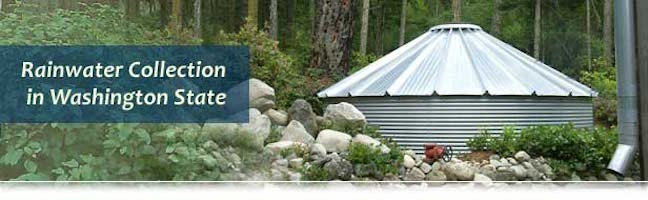
Colorado needs to look no further than Seattle and Washington State for the sustainability benefits of Rainwater harvesting.

The Colorado rainwater harvesting narrativeshows that as time marches forward, some laws that were passed almost one hundred years ago should be reconsideredbecause they are just no longer practical. Sustainability wasn’t a factorback then, but it sure needs to be part of the equation now.

In October 2009–after years of argument–the state of Washingtonofficially declared thatpeople could collect and store rainwater captured from a rooftop or other “guzzler” system without a water right, as long as it is used on site and essentially isn’t hurting anybody else. San Juan County was the only one that allowed rainwater collection and potable use for single family residence as an exemption to the water rights issuebefore the 2009 decision.

Since then, King County recognized thebenefits of rainwater collection in January 2011 for householdusage, with support from State Department of Agriculture. So now, King County Department of Health not only allows, butencourages rainwater collection.

Commercial, private, andcommunities all are findingbenefits to rainwater collection and the positive effects on the environment of the Pacific Northwest and our water supplies. The Washington State Department of Ecology continues to support rainwatercollection and studies the effects of in stream flow rates (Skagit) and salmon habitat.

All Washington State counties allow for rooftop collection for non-potable use, with some allowing for potable use. Non-potable use includes irrigation, toilet facility, laundry,wash down and others that are not intended for consumption or bathing. Commercial applications are directing roof runoff to irrigation and toilet facilities, rather than having this runoff enter our bodies of water withpollutants picked upalong the way.Households are not only using rainwater for non-potable use, but are having systems installed that treat and disinfect therainwater to potable standards that aresuperior to city drinking water, thus conserving water by simply not allowing it to become runoff. Ruralhouseholds are using rainwater collection that benefits aquifers by rainwater collection and household use, through infiltration after use.Communities areorganizing communal gardeningapplying rainwater collection, removing the strain on small water systems, while promoting communityevolvementand education.

We congratulate Colorado on its progress in exploring new (to them) sustainability methods. We welcome Colorado’s steps towards better understanding of thebenefits that we in WashingtonState currently enjoy.


Cost vs. the Value of Water


Close-up of a worn, metallic fountain pen nib on a black surface.Humans cannot survive without water. But, how much should water cost?
Below is a throwback Thursday post about the cost of Seattle water:

The Seattle water system is a good one,provided by Seattle Public Utilities. But, as the demand grows with urban development and population, the cost of Seattle water will need to rise to support expansion.

A recentarticleby Gene Balk in the Seattle Times makes some interesting points. Balk mentions“…bafflingly – drought-stricken Fresno, Calif., has some of the cheapest water in the nation. At a 50-gallon-per-person usage, a family of four would pay just $41.63 – less than one-quarter of the cost in soggy Seattle.”

Balk goes on to write:“Seattle has such high rates because we’ve invested more than most places in our water infrastructure in recent years. We relocated our reservoirs underground, in compliance with federal mandates, to keep our drinking water safe from contaminants. “

We can clearly see that it’s not theamountof Seattle water that is the generator of costs, it is theinfrastructurerequired to convey and treat the water to potable standards.

Approximately 70% of household water demandis for non-potable usage. Irrigation, water closets, laundry, and wash down account for this non potable use. Rainwater collection can mitigate non potable use of city water and have a positive effect on our centralized water system and environment.

The commercial building owner and the home owner can enjoy healthysavings on future Seattle water bills by utilizing rainwater collection. Stormwater reduction could be significantly recognized through on site filtration if buildings and homes in the urban environment adopted rainwater collection.

Seattle is a progressive city in many ways and rainwater collection is part of that progression.

This article was originally published under the title The Cost of Seattle Waterat RainBank.info

Water Tank Distributor


Seattle based RainBank Rainwater SystemsLLCis the Northwest distributor ofContain Water Tanks,servingWashington State, Oregon and Idaho.

Close-up of a worn, metallic fountain pen nib on a black surface.Contain Water Systems Inc. Water Series tanks & accessories are designed and engineered for several applications. Rainwater harvesting, stormwater management, fire protection, irrigation, agricultural, mining, potable water and many other applications. Contain Water tanks are manufactured from high quality corrugated, hot dipped galvanized steel for superior strength and reliability.

Contain Water Systems Inc.Water Series Tanks include a full scale structural engineering package with each estimation designed to the seismic area in your project location throughout the USA & Canada. Contain Water Tanks are engineered to include 165 MPH wind speeds, durable snow loads and seismic forces at specific project locations. Contain Water Systems Inc. water series tanks & accessories are backed with a20-yearwarranty!Extensive engineering to national design codes make the Contain Water Tankextremelyadaptable to any climate,landscape type, or building facility.

Contain Water Tanks & accessories are packagedefficiently as well aseasily transported into hard to reach locations or building facility. Each tank is custom built,unique to the customer’s needs and assembled at the project site byqualified Contain Water Systems Inc.certified installers. Contain Water Systems water tanks range from 6 ft. to 180 ft. in diameter and up to 400 feet in diameter as an open top tank.

Most Popular Tank Applications

  • Fire Protection Water Storage Tanks
  • Bulk Storage Tanks
  • Wastewater Tanks
  • Stormwater Management
  • Treatment Tanks
  • Mining, Minerals & Quarry Bins
  • Clarifier Tanks
  • Irrigation Water Tanks
  • Industrial Liquid Storage & Processing Tanks
  • Aquaculture Fish Brooding Tanks
  • Rain Cisterns & Tanks
  • Thermal Storage & Water Cooling Tanks
  • Brewery & Winery Tanks
  • Greywater Tanks
  • Agriculture Water Storage Tanks
  • Sand Filter Tanks
  • Potable Water Storage Tanks
  • Enclosures, Canopies, Houses, Cabins
Close-up of a worn, metallic fountain pen nib on a black surface.
Access Doors Through Liner

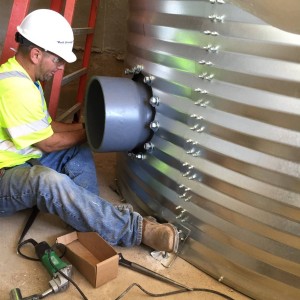
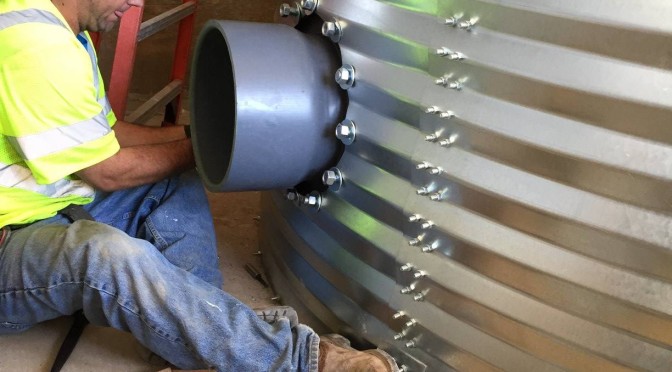
Contain Water Systems Inc. is the only manufacturer that carries a 20-yearwarranty and offers a through the liner, grade level access.

RainBank Rainwater Systems LLC has 15 years of steel water storage tank construction in Washington State and is now offering an alternative Close-up of a worn, metallic fountain pen nib on a black surface.in the corrugated steel water tank market in Washington, Oregon, and Idaho. At RainBank Rainwater Systems LLC and Contain Water Systems Inc. we service what we sell and hold a strong dedication to commitment and quality. Contact our team to see how we can assist your project.

Use the form below:

Go back

Your message has been sent

Warning
Warning
Warning
Warning
Warning

Warning.