
Tag Archives: featured

Our World’s Water Supply is Limited


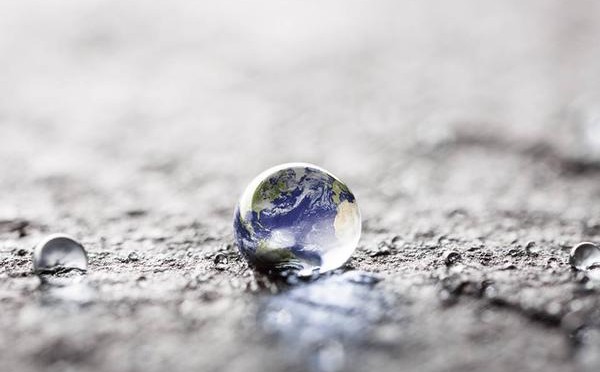
A small globe inside a clear water droplet on a textured surface.Do you know that up to 60% of the human adult body is water?

According to H.H. Mitchell, Journal of Biological Chemistry, the brain and heart are composed of 73% water, and lungs are about 83%. The skin contains 64% water while muscles and kidneys are 79%. Even bones are a watery 31%.

With that said, here are some important facts about current limited global water availability:

  • 783 million people do not have access to clean drinking water
  • One half of the world’s hospital beds are filled with people suffering from water borne disease.
  • 64% of households throughout the world rely on women to get the family’s water when there is no water source at home.
  • Globally we use 70% of our water sources for irrigation and only 10% for domestic use.

Water is a limited resource; it is not infinite. What each of us does in the world and how we live affects our water supply. Wecan make a difference. We can take steps globally to protect our water resources by simple conservation techniques.

A child dances energetically while a group plays drums and claps outdoors.Education is the key to protecting the water supply in developing countries and industrial countries as well. Non-profit organizations such as Bank on Rain are spreading the word about rainwater collection and teaching conservation techniques to those who do not have a clean source of drinking water.

Man giving a presentation to an audience in a conference room.
Ken Blair, AP, IS, presenting educational seminar about rainwater collection. Do you know that up to 60% of the human adult body is water?

Ken Blair, president of RainBank Rainwater Systems is a lifetime member of ARCSA. The Mission of the American Rainwater Catchment Systems Association is to promote sustainable rainwater harvesting practices to help solve potable,non-potable, stormwater andenergy challenges throughout the world.

Ken has also achieved the status of Accredited Professional, Systems Inspector, and is ARCSA’s Northwest Regional Representative.
Water Districts Must Adopt Potable Rainwater Collection


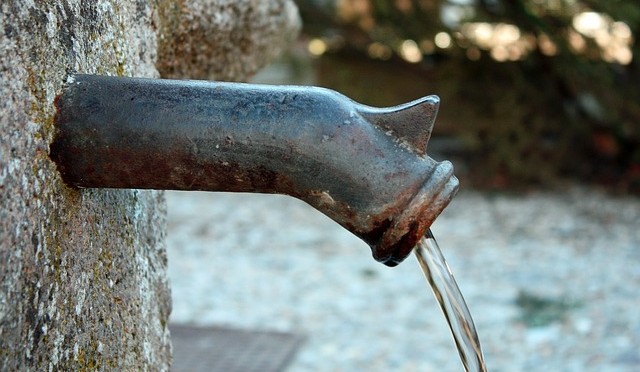
Rusty outdoor water faucet with water flowing from it.Even with the currentdrought, some water districts, municipalities and counties in Washington are still noton board with collection of rainwater for potable usage.
With the newly released water supply predictions from Seattle Public Utilities stating that a 30% reduction in available water within the next 35 years is likely, counties and municipalities in Washington State that do not currently allow for potable use of collected rainwater should reconsider this position.

Both Pierce and Snohomish County water districtshave yet to allow rainwater collection for potable usage for residential use. The cities of Bellevue and Sammamish, even though part of King County, which for several years hasallowed rainwater harvesting for potable use, continue to refuse rainwater collection as a potable source of water for a single-family residence. Both county’s water districts, along with Seattle Public Utilities are part of television advertising campaign asking customers to take shorter showers and only do full loads of laundry and dishwashing.

Is this their solution to the growing problem of water availability? I recently met with the water district in Pierce County at Pacific Lutheran University about a possible project for sustainability including rainwater collection for a dwelling on campus, to be used as an example of potable use. The purpose was for students to gain experience about rainwater harvesting in a real life .A representative of the water district told us it would never happen as long as he was in charge.

I recently represented a customer in Sammamish who was pursuing rainwater collection for non-potable use (toilet and laundry facility) for five new single family residences and was met with significant opposition by city officials. Multiple meetings with the city resulted in the customer giving up his pursuit. Instead, the houses will be totally dependent on the city water supply.

Snohomish County’s smaller water districts have resorted to purchasing water from the city of Everett during this drought because of their water supply running extremely low this summer. But yet, the county still takes the stance of not allowing residential potable usage of collected rainfall. What we’re talking about is rain that could be collected during rain events to help supplement a burdened city water supply.

Most counties in Eastern Washington, even though extremely affected by the drought, have yet to adopt rainwater collection for potable use.

It is time for these districts to become educated in the benefits of rainwater collection and allow customers to become their own purveyors of their own water. To be held hostage by the water districts because of revenues is not only wrong, but it also intensifies the water shortage issues we have experienced and will continue to experience.

Water Supply Predictions from Seattle Public Utilities


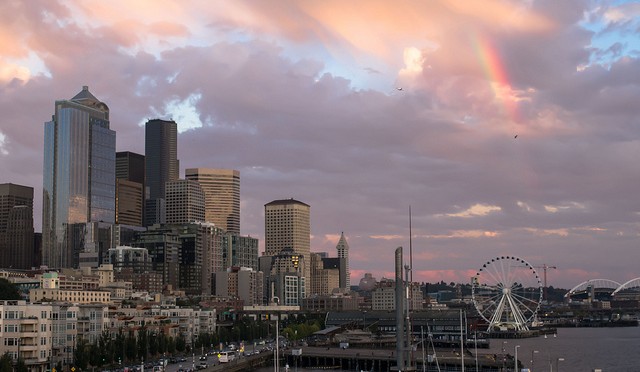
City skyline at dusk with a rainbow and ferris wheel.The water supply prediction scenarios from Seattle Public Utilities are in – and the outlook isn’t good for Seattle and Washingtonians.

According to an article on Grist.org titled, This Drought is so Bad That Even Seattle is Running Out of Water, “Almost all the future scenarios modeled by SPU showed big drops in what’s known in water-utility lingo as “firm yield”: the amount of water that can be reliably delivered. Even assuming a drastic cutback in the amount of greenhouse gasses being emitted today, Seattle is looking at reduced firm yield of an average of about 30 percent through 2050, according to three of these future climate simulations. …”

One option for increasing water supply includes drawing water from Lake Youngs, but that might pull mud into the water supply, requiring expensive water treatment. Water from Puget Sound is an option but that would involve costly desalination.

So, what’s one of the country’s the fastest-growing cities to do? Although Seattleites have been proactive about conserving water usage over the last 50 years with efforts like low-flow toilets, there’s only so much cutting back you can do when supply is tight.

An article on InvestigateWest titled, Climate Change is Darkening Seattle’s Water Forecast, shares that water supply predictions are dire, even though models may be incomplete and involve guesswork and assumptions based on “what-if” scenarios.

“Quietly unveiled to regional water managers over the summer, the admittedly incomplete – and yet extremely sobering – calculations show the amount of water Seattleites can count on could be reduced by as much as half over the next 35 years and nearly three-quarters by the end of the century.”

The article goes on to share: “The climate models are not perfect,” acknowledges SPU climate researcher Paul Fleming. But these simulations are clearly showing that “climate change will increase the magnitude and the likelihood of those events occurring,” Fleming said.”

Seattle, it’s time to go beyond conservation efforts like taking shorter showers and running your dishwasher less often. Do you know that with rainwater collection, you can have your own supply of water for washing laundry and flushing toilets? In some areas, you can even collect your own drinking water.

RainBank customers are already benefiting by collecting rain. Read more about RainBank systems in Bellevue, Vashon Island and the Puget Sound area and how folks are proactively dealing with More Cuts To Seattle Water Usage.