
Tag Archives: featured

Can Structures be Spared from Wildfires?


The summer of 2015 was one of the costliest and deadliest for the U.S. Forest Service. Spending around $200 million per week, the service battled drought-driven wildfires across the country during this time. According to Agriculture Secretary Tom Vilsack. Oregon and Washington were among the hardest hit states, with hundreds of thousands of acres burned, human and animal lives lost, homes and businesses decimated.

Here is a reminder about how steel tanks mightmitigate loss in a wildfire situation:
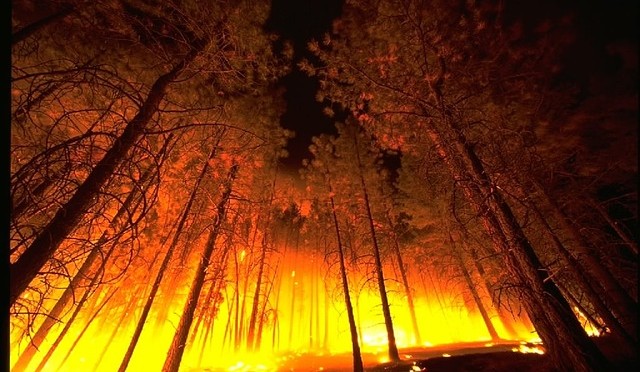
Forest engulfed in intense wildfire at night.Fire is a frightening concept, but an unfortunate reality.

In rural areas, away from municipal resources, a water tank used strictly for fire suppression may be the only way to protect your family, farm, house, or business.

An exterior wildfire suppression system includes an array of sprinklers supplied by a water source. If there is no natural water source, a water storage tank designated as the source of water supply can make the difference in protection. Sprinklers attached to the roof and around the perimeter of the building are meant to saturate and create humidity. The idea is to soak the property’s vegetation and roof of the home.

The amount of time a system will run depends on amount of water available. A system with 30,000 gallons of storage can prodWorkers use cranes to unload large metal tanks at an industrial site.uce 30 gallons a minute for 16.6 hrs. If used with a wetting agent, the solution will stay intact for a longer period. Having a source of water designated for fire protection can be an investment that could save your home.
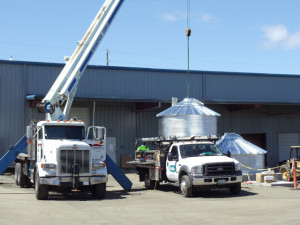
RainBank Rainwater Systems has been installing corrugated steel water tanks for over 15 years and recognizes the benefit of onsite water storage for wildfire protection. The National Fire Protection Association provides codes and standards for fire protection that are available for free for online viewing.

Through its Fire Adapted Communities Program, the NFPA offers information and specific actions you can take, to loweryour risk in the event of awildfire. Take a look to learn about how you can protect your home and your community from the devastation of wildfires.

This is a throwback Thursday post from RainBank, originally published on August 24, 2015 under the titleProtect Your Home and Business from Wildfires
Water Conservation & Rainwater Collection Lag In Conservation Efforts


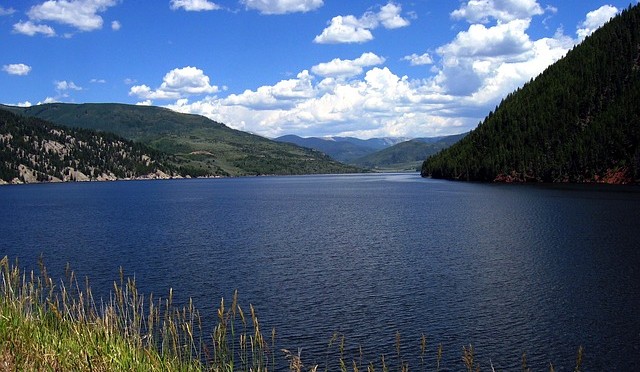
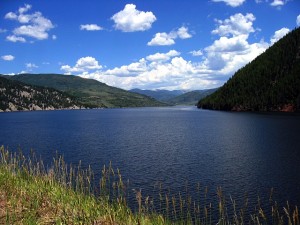
Scenic lake surrounded by hills under a blue sky with fluffy clouds.Green building, low carbon emissionsand solar power have all gotten a lot of press in the past couple of decades. What seems to be lagging behind is water conservation and rainwater collection. All are important for sustainability, but without water, it won’t matter. WE are naturally dependent on water; we cannot live without clean drinking water.
Tap water is relatively cheap – pennies on the dollar. WE pay very little for it due to bulk purchasing from manufacturing and agriculture. We have clean, safe drinking water piped to our homes and all we need to do is turn on the tap without giving it much thought at all.

What goes on behind the scenes is not a concern to most. Chlorine to disinfect along with fluoride for the health of our children’s teeth is all done by our water suppliers. All we have to do is pay our bill every month.

That is changing however; our infrastructure is beginning to show signs of aging. Boil your water alerts are becoming more commonplace. Pollutants are affecting our municipal water supplies more often.

Shortages due to drought conditions have affected many of our western states – the most newsworthy being California, where Folsom Lake,Northern California reservoirhas mysteriously run dry, leavingthousands of fish dead. (Is anyone minding the store in California?) Washington State is also experiencing the worst drought ever recorded.

Small efforts are being made to get the word out by water suppliers. Voluntary water reduction has achieved a small percentage of actual impact since the drought is continuing into fall so far. Low snow pack is expected again this winter in the Cascades, both north and south. Efforts by water suppliers will be focused on education aboutconservation, but old habits are hard to break when water is so cheap. Homeowners and businesses can expect increases in prices, but that will have little effect on conservation. Breakdowns in infrastructure, accidental releases, and more contamination will become more common in the very near future.

Private rainwater collection will have the most positive effect on water shortages in the near future. A simple system to irrigate landscaping will save hundreds of millions of gallons of municipal water next summer. Toilet, laundry facilities, and wash down using rainwater collection might make the difference in municipal supply shortfalls. A potable whole house system provides a legal, viable source that puts the owner as being his own purveyor of his or her water source. Rainwater is a clean, reliable water source than can be collected during those rainy periods and stored for dry months.

Progressive thinking on all sustainability efforts is good for the health of our planet, but water conservation and rainwater collection will be the most important.

Aging Public Water Systems Money Sits Unspent


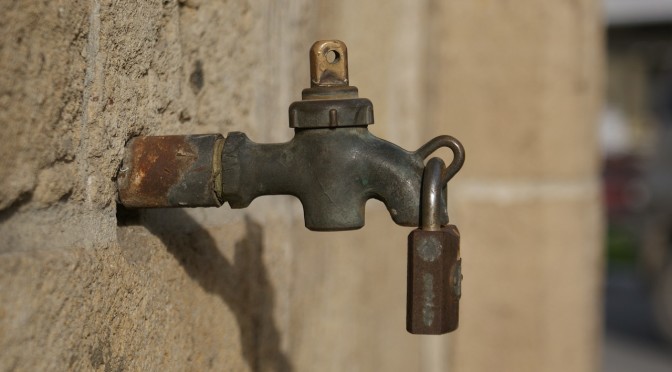
Rusty outdoor faucet secured with a padlock.Water is vital to public health, maintaining our environment and preservation of quality of life. We simply can’t live without water. Our nation’s public water system infrastructure is in dire need of upgrading. Many systems are so old that the maintenance costs are beginning to overtake the cost of replacement.

The EPA offers funding for low interest loans to public water systems. According to a Washington Times article, ‘The U.S. Environmental Protection Agency projects it will cost $384 billion over 20 years just to maintain the nation’s existing drinking water infrastructure. Replacing pipes, treatment plants and other infrastructure, as well as expanding drinking water systems to handle population growth, could cost as much as $1 trillion.”

Furthermore, the article goes on to note that in spite of demand, more than $1 billion sits, unspent, in a funding pool managed by the largest federal aid program for drinking water improvements, the Drinking Water State Revolving Fund, (as reported after a review by The Associated Press).

Why would available funding to improve public water systems, necessary for public health and a strong economy, be left sitting in government accounts? According to CNBC, “Project delays, poor management by some states and structural problems have contributed to nearly $1.1 billion in congressional appropriations sitting unspent in Drinking Water State Revolving Fund accounts as of Aug. 1.”

Adding to the muck, the money that is being tapped is largely used for services associated to drinking water, but not infrastructure improvements. The CNBC article goes on to report “About 1 in 5 dollars in recent years has gone to purposes such as paying the salaries of state employees and contractors. Those expenses are allowable but leave less for the repair and replacement of leaky pipes, deteriorating treatment plants and century-old storage tanks.”

So, while funding is available for municipal and county water systems improvement, almost 20 percent of the money drawn from this grant pool is currently being used to pay for administrative costs, leaving less money available for the $1 trillion estimated that will be needed across the board – for just water infrastructure improvements, not inclusive of roads, bridges, energy, etc.

There are many safe and sustainable options available to supplement public water systems with rainwater collection. While available in many areas, we need more education about the value and stability achieved by adding a rainwater collection system to a residence or commercial property. In some areas, a rainwater collection system could be sole-source for whole house usage, or a supplement to city water, easing the burden on public systems caused by population growth and aging infrastructure.