
 RainBank has always been proactive in the advancement of rainwater collection. We designed and built the first potable system in Seattle, as well asthe first potable systems in Skagit, Jefferson, and Whatcom Counties.
Additionally, we havebeen designing and building rainwater collection systems for potable and non potable demands for more than15 years throughout Washington and Oregon.
RainBank beganin San Juan County, which at that time, was the only county that allowed rainwater harvesting in the state. San Juan County had an exemption to the state’s water rights laws that considered rainwater a tributary and therefore not subject to those laws. It wasn’t until 2009 that Department of Ecology convinced the legislature that rainwater collection was beneficial and therefore should be allowed. More counties began to come on board to allowthe use of treated rainwater for potable use, with King County adopting in 2011. Since then, many counties in Western Washington now allow the practice, but there are still those who have not.
We were recently contacted by a customer from Wahkiakum county in southwest Washington, who wishedto use rainwater collection for potable use on his property. The spring that was grandfathered in did not pass the last well report and was deemed unsafe for consumption. I petitioned the county health department for acceptanceof a sole source potable system and was told they never heard of the practice. I sent documentation fromDepartment of Ecology, King County policies, ARCSA (American Rainwater Catchment Systems Association), a list of Washington counties that have adopted rainwater use, a few case studies, and our website.
I am pleased to announce that Wahkiakum County responded that they will consider a design for residential potable use for this project.
It is through experience, expertise and commitment that RainBank Rainwater Systems is the leader in Washington State’s rainwater catchment industry.
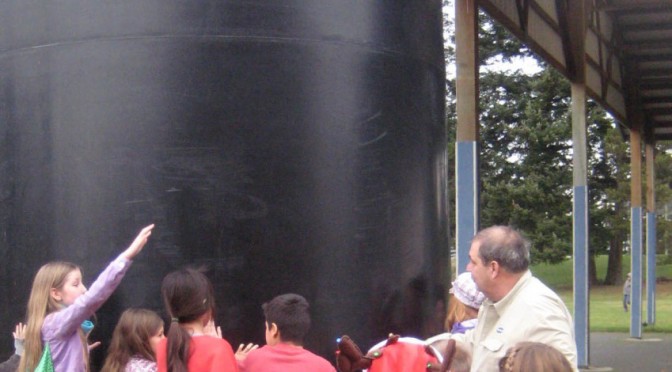
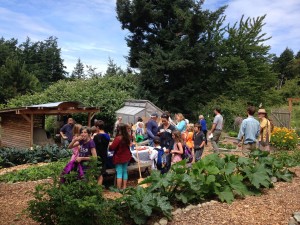 According to the National Farm to School Network, “Farm to school enriches the connection communities have with fresh, healthy food and local food producers by changing food purchasing and education practices at schools and preschools.”
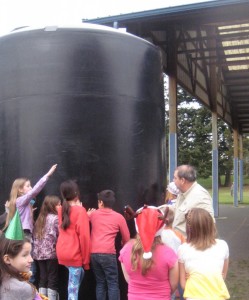 RainBank was asked to construct a system and then
 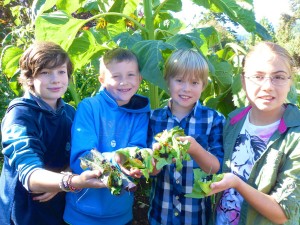 The Orcas Island School garden is flourishing and community involvement is extraordinary. We are proud to part of this exceptional project and hope other communities will offer similar programs. Sustainability is the future for these young persons.
 We first