
Tag Archives: featured

Rainwater Harvesting in Seattle Gains Momentum


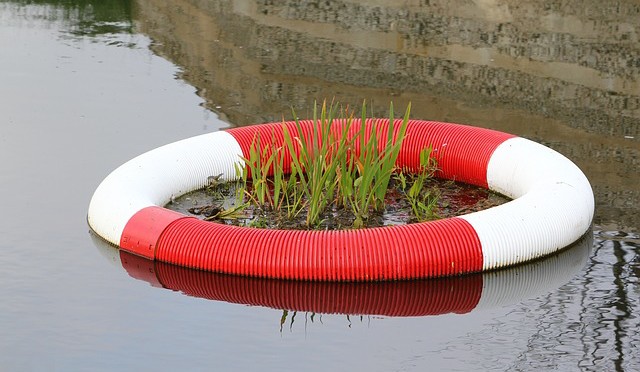
A red and white lifebuoy floating on water with grass growing inside it.With the current drought emergency declared by Governor Inslee in May, RainBank Rainwater Systems has seen an increase in inquiries about designs and installations for rainwater collection systems from all over the Puget Sound region.

Seattle is topping the list of new customers who are either expanding existing systems, or are first time customers looking into design and installation. Even though Seattle Public Utilities has said they do not expect to see any water rationing, others are looking into that possibility. We all can do our part to conserve the municipal water supplies by only irrigating in the evening and having our cars washed at a facility that recycles its wash down water. Another way to conserve water is by checking for water leaks in our homes and businesses and teaching our families simple conservation techniques.

Of course, installing a rainwater catchment system will help conserve water, reduce stormwater runoff, and protect our lakes, streams, wetlands and aquifers for future generations. Seattle has a unique opportunity to lead the nation in water conservation due to our climate. With 36 inches of average annual rainfall including 3.5 inches average summer rainfall a well-designed system can produce and store enough water to support an average household. Here in Seattle, we do not see extreme cold temperatures during the winter months, so freeze protection of tanks and plumbing is relatively easy to address. Washington State Ecology has determined through study that most roof materials are safe for collecting rainwater for household use. King County Health is proactive in rainwater collection regulations and code writing.

Whether a small system designed for supplementary use, or a large system for whole house demand is desired – any amount of conservation can be achieved.
What is Seattle’s Position on Rainwater Collection?


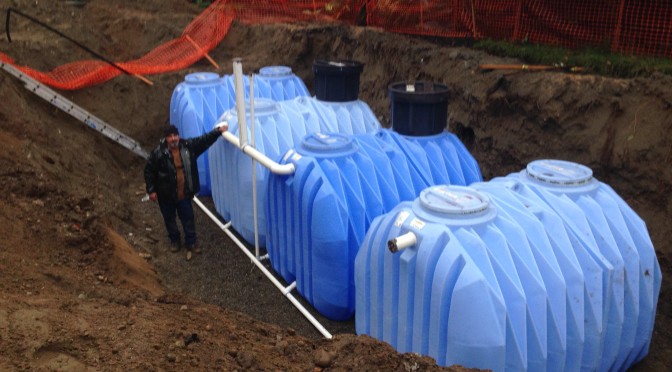
Workers installing large blue septic tanks in a trench.In October 2009 Washington State revised its water rights laws to allow rainwater collection. King County (Seattle) has adopted rainwater collection for potable use in single-family dwellings, as well.

Seattle and King County encourage the practice of rainwater collection. King County Health Department / Plumbing Division reviews designs, approves designs for permitting, and inspects installations of RWC for potable and non-potable use. Only an engineer, licensed in the State of WA with experience in RWC or an American Rainwater Catchment Systems Association (ARCSA) accredited professional can design systems for potable usage. Currently potable use is only allowed for single-family residences, not public. Non-potable use, such as toilet facilities, wash down, irrigation, and laundry is allowed for public use.

A simple irrigation system not connected to household water usually does not require a permit. If a rainwater collection system is connected to household plumbing a “reverse pressure back-flow assembly” (RPBA) is required to be installed on the city water line entering the dwelling or building and requires a yearly inspection by a licensed plumber that carries a current endorsement. The RBPA can be waived if an “air gap” is installed so there is no cross connection between city water and the collected rainwater.

There is current code for rainwater collection that must be met for permitting and installation. Green Stormwater Infrastructure (GSI) was enacted to control stormwater runoff and mandates that all new construction, commercial and residential have a stormwater management plan in their design. Infiltration or use of runoff is mandated by City of Seattle, King County and State.

Seattle Public Utilities has initiated a rebate program called Rainwise a few years ago, which encourages infiltration on site and is seeing some success in stormwater with small residential rain gardens. Governor Inslee has requested a small amount of money for education on conservation from the emergency drought relief fund.

For more information, visit:
www.seattle.gov/DPD/Publications/CAM/CAM520.pdf

Rainwater Harvesting in Urban Areas


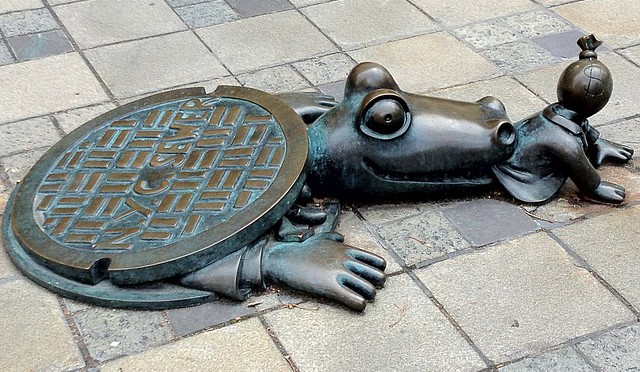
Sculpture of a hippopotamus with a manhole cover as its shell on a tiled pavement.With so many citizens living in urban areas, cities must approach rainwater harvesting differently than in rural areas, where rain is absorbed into the ground or evaporates.

When it rains in an urban area, rainwater becomes runoff via streets, rooftops and parking lots. Runoff is captured in drains from which it travels via the sewer system, eventually winding up in a lake, creek, or other body of water. Since stormwater is typically released without any pollution management, it can become contaminated with bacteria, heavy metals, nutrients and particulates. So, in the city, water that replenishes our aquifers may have become tainted.

According to Jennifer Drake, Assistant Professorof Civil Engineering at University of Toronto, “Under natural conditions, aquifers are sustained through the infiltration of clean rainwater and streamwater into the ground. But for urban environments, these sources are cut off by the impervious landscapes. Instead, water from leaky sewers, water mains, septic tanks and landscape irrigation becomes the source for groundwater recharge. Since many of these sources are wastewater, they’repoor-qualitysources and can lead to groundwater contamination.”

Low Impact Development (LID) includes stormwater management tecniquesthat allow urban runoff to seep into the ground and evapotranspire into the air. Sustainability systems are built into green roofs (like rooftop gardens), rain gardens (on ground level), which allow stormwater to soak directly into the earth and runoff is naturally filtered by soil as it goes back into the ground and replenishes aquifers.

Read more about Stormwater innovations mean cities don’t just flush rainwater down thedrain. The article was also republished via ARCSA.