 Whether you are designing your own rainwater catchmentsystem or having one designed by a professional,success of your rainwater catchmentsystem design is dependent on some key factors.
What do I want to accomplish with my design of a rainwater catchment system?
Irrigation, toilet and or laundry facility, supplementary to well water or city water, whole house usage, and sole source are the main purpose of designs.
How much rainwater can I collect from my roof? Will it be enough to supply myneeds?
One inch of rainfall per 1,000 square feet of roof will yield approximately 623 gallons of water. Evaporation, wind, and spillage account for 15 – 20 % of loss. A 2,000 square foot roof with 36″ of annual rainfall may yield 44,856 gallons. With an efficiency of 85%, that equals38,128 gallons.
One inch of rain is needed for the healthy growth of plants.Thisequates to .623 gallons per week for 1 square foot of planting, which can add up rather fast, so keeping your irrigation needs small and giving consideration todrought tolerant plants is recommended.
Toilet and laundry facilities account for 49% of household usage. Designing and building a system for this purpose alone can cut your water and sewer bill in half. New construction is the best time to implement this type of system however, retrofitting plumbing in an existing home can be accomplished.
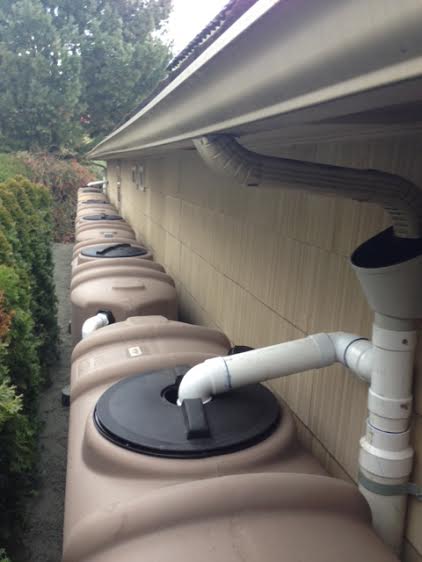
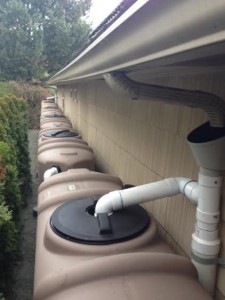 If the collection area is small or available space for storage is restricted, a supplementary system can be achieved with “slim line” style of cisterns or buried tanks. A small roof can still be effective in collection if used for a supplementary source to well water or city water.
Whole house usage, or potable water, can eliminate dependency on city water or well water, where you can still havecity or well water as a back up during dry times. With the advanced filtration and UV disinfection offered today, safe, reliable drinking water for whole house usage will exceed the quality of most well and city water.
Now that you are considering what usage of collected rainfall would best suit your needs, we will discuss sizing, configuration, implementation, and maintenance of a designed rainwater catchment system in upcomingposts.
Remember to check the box below to be notified of new posts via email. (RainBankrespects your privacy and will not share or sell your contact information.)


 In Seattle, we are not facing a water shortage. Here at RainBank, we take aging water systems, water usage, storageand rainwater collection seriously. But, that doesn’t mean we can’t have some fun while being mindful about water.