
What is Your Water Footprint?


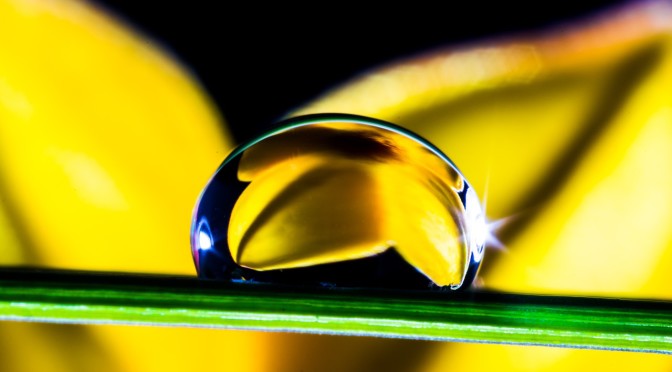
Close-up of a water droplet on a green leaf against a dark background.According to National Geographic, the average American lifestyle is kept afloat by about 2,000 gallons of H2O a day–twice the global average.

Have you ever calculated your water footprint?Do you know how much water you use? Do you know how much it costs in dollars? Do you know that how much water you use and how you use it impacts the environment? In a recent article by Scott Tong, the authorsurveyed folksto see how much water they estimatethe average person/family uses per day. Then he measured how much water his family of five uses. The results were a surprising.

There are also hidden ways we usewater that we don’t always take into account. As reported by National Geographic, nearly 95 percent of your water footprint is hidden in the food you eat, energy you use, products you buy, and services you rely on.

If you want to calculate your water footprint and learn ways to save water in your household, click here for the Water Footprint Calculatorfrom National Geographic.
Skagit County’s First Residential Building Permit With RWC as Sole Source of Water


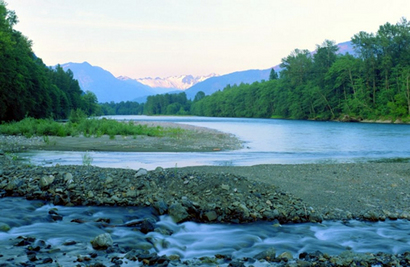
A peaceful river flowing through a green valley with distant mountains.Skagit County Planning Department issues its first residential building permit with rainwater collection as sole source of water.
Property owners affected by the in stream flow rulein the Skagit Valley river basin now have a viable solution for residential development of their properties.

Last week, Skagit County Health Department issued a “water availability” based on rainwater collection, allowing construction of a single family residence using rainwater as thesole source of water.

The system design collects rainwater from the roof, which is pre-screened and conveyed to 10,000 gallons of storage adjacent to the house. The water is pressurized, then filtrated using sediment and carbon filters and disinfected by ultraviolet light forwhole house, potable use. With an average annual rainfall of 33.2 ” and 3,500 sq. ft. of roof, 72,392 gallons are available for collection. After household use. the water is returned to the soil through the septic system and leach field just like a well system with no ill effects on the in stream flow rates.

Simple, routine maintenance conducted by the homeowner will supplythis 3 bedroom, five occupant home with a safe, reliable, clean source of potable water while benefitting “in stream flow” and salmon habitat.

Skagit River Looking East

Skagit County Water Rights Battle


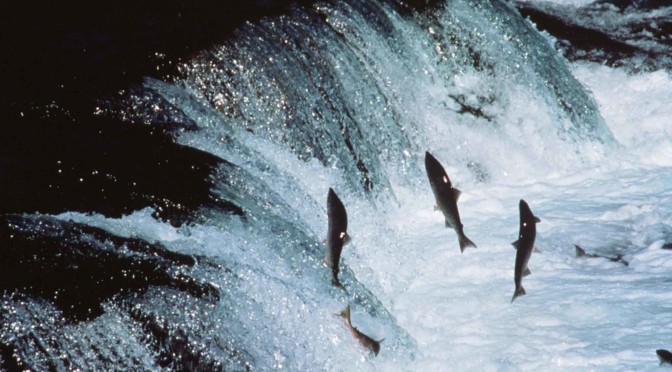
Salmon jumping upstream through a waterfall during migration.The ongoing battle of water rights continues in Skagit County – with Senate Bills 5129, 5136, & 5407 introduced by Republican Senators Bailey & Pearson. The bills, if passed, would repeal some in stream flow rules from the original 2001 ruling.

On January 15, 2015,Department of Ecology Director Maia Bellon denied the petition to reallocate water from the Skagit river and its tributaries. According to an article in The Skagit Valley Herald “In her response to the petition, Bellon said that finding durable, legal water solutions for homes and businesses was a priority for Ecology, and that they are “working very hard to help resolve water supply concerns for Skagit Basin residents.”

Also mentioned in the GoSkagit.com article, Zach Barborinas representing Just Water Alliance, commented that “Ecology should set aside water first and for most for human domestic use.”

Swinomish Tribe Chairman Brian Cladoosby stated”the tribe has a high threshold for lawsuits, but if parties break an agreement with the tribe or break the law, the tribe is willing to go to court.”

The three senate bills introduced by the Senate Committee challenges the 2001 ruling of exempt wells in the Skagit river basin and its tributaries which according to Ecology and the Swinomish tribe “would adversely effect salmon habitat.”

Sincerainwater collection for potable use was approved by Skagit County in 2014 for single family residence, a solution to this lengthy expensive battle could be readily at hand. Promotion, incentives, or grants for the age-oldpractice of rainwater harvesting should be in place to supply residences affected by this ruling. Rainwater Collection is a safe, viable source of water, and is most often a cleaner source than well water. The Department of Ecology states thatrainwater collection is beneficial to in stream flow rates and salmon habitat.

Rainwater Systems