
Rainwater Harvesting Development


Colorful dry erase markers and an eraser on a whiteboard shelf.If you are an interested individual or a professional seeking educational development courses and workshops on rainwater harvesting for residential, commercial, potable or non-potable systems, you should visit ARCSA’s website to sign up for a course or webinar.For more information about ARCSA’s professional development programs and workshops, click here.

Rainwater Systems is the Northwest Regional representative for the American Rainwater Catchment Systems Association (ARCSA).

ARCSA’smission is to promote sustainable rainwater harvesting practices to help solve potable, non-potable, stormwater and energy challenges throughout the world. which, of course, aligns with RainBank’s core values. We hope you’ll visit ARCSA and consider becoming a member. You can sign up for ARCSA’s newsletter here.
Making Smart Choices About Water Use


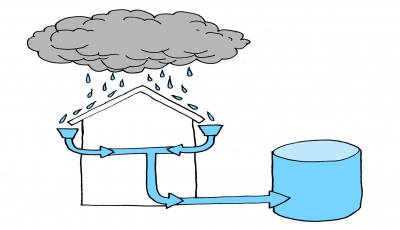
Diagram showing rainwater collection from a roof into a storage tank.

Rainwater collection is growing inpopularity in the United States, including here in the Seattle area. Many commercial and residential new construction projects are discovering that rainwater collection can save costs on complying withthe mandated GSI (greenstorm waterinfrastructure) of infiltration on site while saving water use and energy at the same time.

Treatingwater for potable standards is not energyefficient formunicipal water districts. Even though water is cheap for the consumer, it doesrequire high costs to maintain this levelof quality to potable standards. Thereason the costs are low to the consumer is because of the large amounts of water being sold to manufacturing and farming. On a large scale, reducing the energy needed by using untreated water for toilet flushing and laundry facilities could reduce the costs of water from these water districts. Imagine the reduction of energy saved if all commercial new construction implemented RWC for this use only.

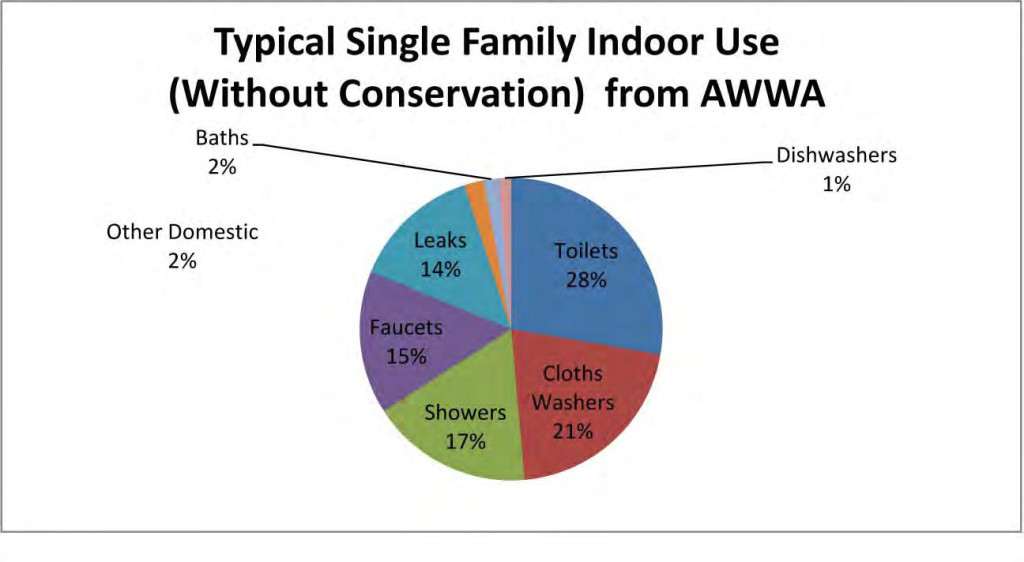
Pie chart of indoor water use in typical single-family homes without conservation.Based on thischart from the American Water Works Association (AWWA) toilets make up28% of residential water consumption without conservation and laundry 21%. The use of highefficiency toilets, washing machines and low flow devices will reduce the amounts even more. A simple rainwater collection system for toilet and laundry will reduce household demand ofmunicipal water by 49%. Imagine the savings on a larger scale forenergy,storm water runoff, depletion of ouraquifers, and demands on a centralized water system.

Every drop of water is important and we can make smart choices about where every drop goes.

Arts and Science Academy To Use RWC System for Toilet Flushing


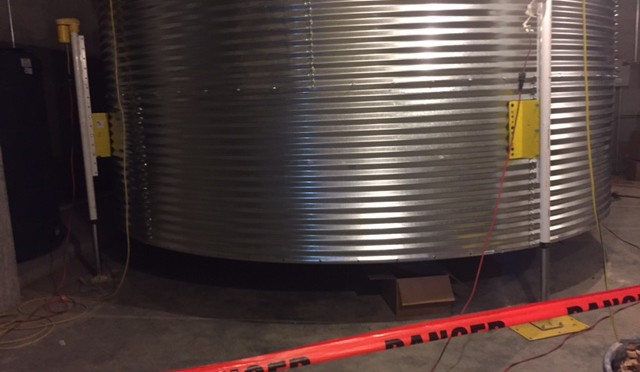
Large metal tank with caution tape around it in an industrial setting.

RainBank Rainwater Systems is constructing a 11,000 gallon flat roof CorGal tank for the Seattle Arts and Science Academy on Capital Hill in Seattle.

The collected rainwater will be used for toilet flushing throughout the school.

The challenge for RainBank was to construct the 10 foot tall tank in the basement of the building with very little head clearance.

Electric bin jacks were used to lift the first two upper levels and roof assembly to place the bottom panels in place.

Seattle Arts and Science Academy joins many newly constructed commercial buildings using rainwater collection to help mitigate storm water run off.

Here’s a short video clip of the build:

Rainwater Systems