Continuing Ed For Rainwater Pros in Vancouver WA


Close-up of water droplets on a green leaf with RCSA logo overlay.Do you know that rainwater harvesting professionals can get their nerd on througheducational opportunities, brought to usby the American Rainwater Catchment Systems Association (ARCSA)?

ARCSA’s mission is “to promote sustainable rainwater harvesting practices to help solve potable, non-potable, stormwater and energy challenges throughout the world.”

In addition to informative articles and other information about rainwater collection, ARCSA offers training and development opportunities for RWC professionals toachieve industryaccreditation.

ARCSA and Washington State University Extension and Clark Countyare offering a comprehensiveRainwater Catchment Accredited Professional training course(please click to register), on August 21 & 22, 2015at the Heritage Farm in Vancouver, Washington.

According to ARCSA’s recent email: With the ongoing water crisis in California, and now the Pacific Northwest, this workshop will focus on the Oregon and Washington Issues. Residents of the Pacific Northwest are encouraged to attend to learn to capture stormwater, while creating additional “reservoirs” to store water for future beneficial uses. You can’t use it if you don’t store it.

Be sure to follow ARCSA on Twitter and Facebook for important updates about California and Washington drought conditions, or sign up for their mailing list to receive emails about rainwater harvesting and educationalopportunities.
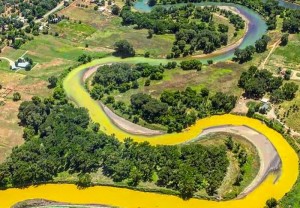
Animas River Toxic Spill Poses Serious Health Risks


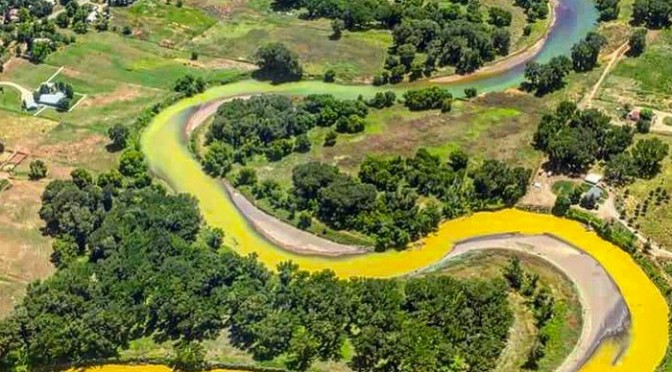
A winding river flows through lush greenery and vibrant yellow vegetation.The August 5th Animas River spill is now delivering serious health risksto three states – Colorado, New Mexico and Utah. Our recent blog post details how the orange colored, contaminated water could be seen working its way toward New Mexico and now, today, the U.S.Environmental Protection Agencyannounced that “surface-water testing revealed very high levels of lead, arsenic, cadmium and other heavy metals as a sickly-yellow plume of mine waste flowed through Colorado.”
The AP story further reports, “Over the long term, these metals can seep into the surrounding water table, potentially polluting drinking wells. The EPA has offered free water testing for homeowners with wells close to the river, but it’s unclear how long that offer stands.”

CBS News reports “Toxicologists say those people who live along the Animas River could be ingesting the contaminated water in any number of ways, such as drinking it or showering in it.”

As we talk about heavy metals being released into our waterways, the keyword here is HEAVY. While some will flow and be naturally flushed away, a great risk is that toxins will sink to the bottom and remain in the water, continuing to contaminate even after the yellow color dissipates and the water begins to appear to be normal.

In its article Rainwater Harvesting Can Create Safe, Decentralized Water Supplies, The American Rainwater Catchment Systems Association (ARCSA) reports, “A well-designed, installed and maintained rainwater harvesting system can provide significant amounts of high-quality water for potable and non-potable, residential and commercial use. Even in the arid Four Corners area of this spill, ample water can be harvested.”

It’s time for all states to begin allowing rainwater collection for potable and non-potable use, so individuals and businesses can harvest water for their own health and well being.

Animas River Pollution Photo courtesy of Snopes

When Will Your County Adopt Rainwater Collection for Potable Use? 


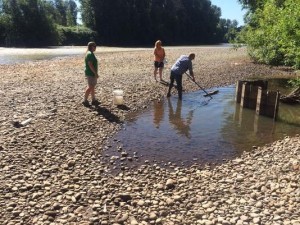
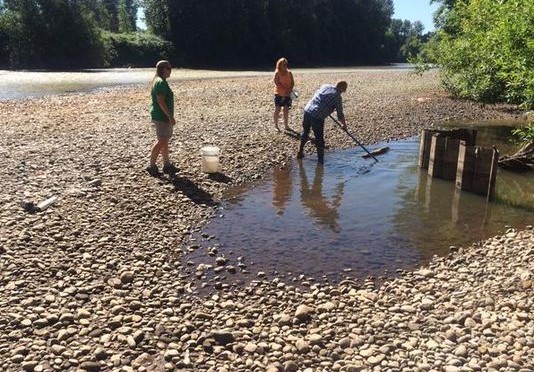
Children exploring a shallow water patch on a rocky riverbed.Snohomish County has over 1,000 water districts that are close to drying up, which ramps up theneed to purchase potable water from the city of Everett. Spada Lake is dangerously low, which jeopardizes water availability for fighting fires

Pierce County faces a similar issue – small water districts are running out of supply, forcing the potentialfor needing to purchase water from the city of Tacoma. The Center for Urban Waters, led by the University of Washington Tacoma, promotes rainwater collection, while some of the districts are not fully supportive of the concept.

Is it time for both of these counties to adopt RWC for potable use?

Snohomish County is surrounded by other counties that have expanded RWC to include potable usage. These counties recognize that potable use of rainwater for single-family dwellings is not a threat to public safety or to the revenue of their water districts. King, Skagit, Whatcom, San Juan, Jefferson, and Island counties all accept the benefits of potable RWC for single-family dwellings.

RainBank Rainwater Systems along with support from the American Rainwater Catchment Systems Association (ARCSA) will continue to educate these two counties as well as others by offering seminars, workshops, and general discussion on the benefits of RWC to motivate them to allow potable usage of rainwater.

Please watch the recently aired KIRO News report about small water districts that are running out of water.

Photo courtesy of King.

Rainwater Systems