

 RainBank Rainwater Catchment System’s president Ken Blair is a co founder and former director of Bank on Rain,a non profit organization providing solutions to developing countries for clean drinking water. Over the past few years, Ken has enjoyed traveling to Sierra Leone Africa, along with others, to assist in providing clean drinking water and sanitation education to school children.
While stepping down from the Bank on Rain board, Ken plans to expand his philanthropic efforts with education offerings to organizations seeking to promote rainwater collection. As such, Ken plans to teach nonprofits and other groups how to introduce rainwater collection in developing countries.
By expanding his reach and working with many to achieve his goals, Ken states. “I feel my talents can be used on a broader spectrum by working with many organizations rather than just one. The need for clean drinking water is a world-wide issue and there are many groups that do good work – all of which need support from contributors and volunteers.”
For more information about rainwater harvesting education for developing countries, please complete and submit the form below.

 Storm water is a concern in the Puget Sound area. Storm drains are overwhelmed during a large event resulting in sewage being released in our waterways. Fish, shellfish, and marine animals experience the brunt of these spills. Plus, toxins from roof run-off enter our storm water systems with every rainfall. Roof runoff carries oil from our driveways into the drain system and into the Puget Sound. Pesticides, fertilizers, and pet fecal matter is carried from or roof runoff into the street drainage system and into the storm water resulting in these pollutants entering the ecosystem.
 Here in the Seattle area we are fortunate to have enough rainfall to sustain a rainwater collection system year-round. Whether a rainwater catchment system is designed to supplement city water usage, or a larger system designed at the sole source of water for your home, a rainwater collection system will save money on water bills and provide good clean drinking water for your home.
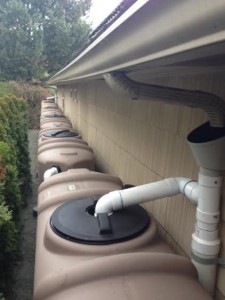 In urban areas, or within Seattle city limits where space is more of an issue, smaller volumes of storage can be used with buried water tanks or slim line design water storage tanks. As little as 3,000 gallons of storage can supplement a house as much as 70 to 80%.