Tag Archives: featured

Families Shirk Suburbia for Urban Life


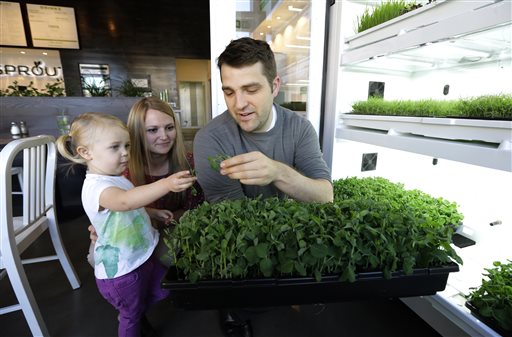
A family gardening together with young plants indoors.
In this March 3, 2015 photo, Michael Kelly offers his daughter, Elea, 2, a taste of fresh herbs that he grows at Sprout, the restaurant he owns in Seattle’s downtown Pioneer Square neighborhood, as his wife, Jenny, looks on. The Kellys live only a few blocks away, and are a part of a small but growing number of parents who are bucking the trend of moving to suburbs when they have children. (AP Photo/Ted S. Warren)

Seattle’s population composition, along with other cities like Portland, OR could be seeing a trend where young parents optto remain in, or return to the city life they enjoyed pre-families.

On March 24th, the Associated Press reported that “A small but growing number of parents are bucking a trend when it comes to raising their kids: Rather than move to suburbs as their parents once did, many are opting to stay in or near downtown.Some do it to seek an urban lifestyle, shorten commutes or be within proximity to restaurants, museums and other attractions.”

Citinga 30% increase in school enrollmentbetween2007 and2012, thisvocal group has been pushing cities to become friendlier to families- by requesting they addschools, green space and recreationalservices to accommodate this growing population.

To read the full article, please click here.

Rainwater Collection and Quality of Life


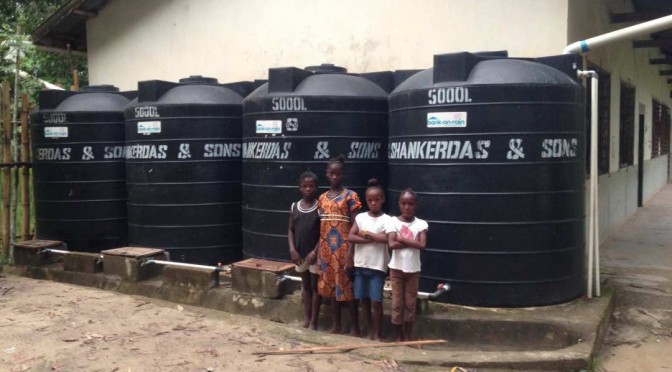
Children standing in front of large black water storage tanks outside a building.TheUnited Nations Environment Programme(UNEP)mission is to “provide leadership and encourage partnership in caring for the environment by inspiring, informing, and enabling nations and peoples to improve their quality of life without compromising that of future generations.”

UNEP was created in 1972 by the United Nations General Assembly for a wide range of environmental concerns and strategies, including Rainwater Harvesting and Utilization. A recent newsletter, “An Environmentally Sound Approach for Sustainable Urban Water Management: An Introductory Guide for decision makers, citesnations around the world thatare currently practicing rainwater collection as a source of water.

Examples are Singapore – with limited land resources and rising demands for water – has done a recent study of urban residential with conclusion of 4% savings from $1.17 per cubic meter to $.96 per cubic meter. A non potable application at the Changi Airport accounts for a 28 – 30% savings.

Tokyo, Japan rainwater harvesting and utilization is promoted to mitigate water shortages, control floods, and secure water for emergencies.

About 750 private and public buildings in Tokyo have introduced rainwater collection and it isnow flourishing in private and public sector.

Berlin, Germany rainwater utilization was introduced in 1998 as part of large scale urban development to control flooding and save city water. Germany is a leader inrainwater collection technology. Many products used in the United States come from Germany.

China has seventeen provinces thathave adopted rainwater collection on a large scale with 5.6 million tanks supplying drinking water for 15 million people.

Of course, Africa is experiencing expansion of rainwater collection systems throughout the continent with the help of many NGOs in Kenya, Sierra Leone, Mozambique and many others.

Other countries such as Australia, Philippines, Indonesia, Canada, and more are recognizing sustainable solutions to the worldwide need fora clean reliable source of water.

Rainwater Collection is Catching On


Two palm trees, one healthy and one dried, displayed indoors.Both commercial and residential rainwater collection customers are expressing more interest than ever before, which is a large part of the reason thatRainBank Rainwater Systems has seena 50% bump in growthover the last year.

Architectural and engineering firms are including rainwater collection systems in their designs. Cities, and counties throughout the state are beginning to understand the connection between stormwater management and rainwater collection.

Developers are saving money on large water bills with rainwater collection, while complying with he “Green Storm water Infrastructure” (GSI). Green building and low impact development are becoming more popular with the general public. Residential customers, new construction and retrofits are recognizing the long-term cost savings, water quality, and security of a more decentralized water system. As a whole, the public is becoming more environmentally aware of our environmental impact and are finding ways to make that impact positive.

County and City planners, building departments, and health departments need to have the tools to make proper choices of acceptance, promotion, code and permitting of rainwater collection systems. RainBank’s president, Ken Blair is the American Rainwater Catchment Systems Association’s (ARCSA) Northwest regional representative and canschedulean ARCSA workshop for those civil departments, engineering and architectural firms this summer in Seattle. Interested parties please contact Kenusing the contact form, or directly at Ken at RainBank dot info.