Washington State Drought Update


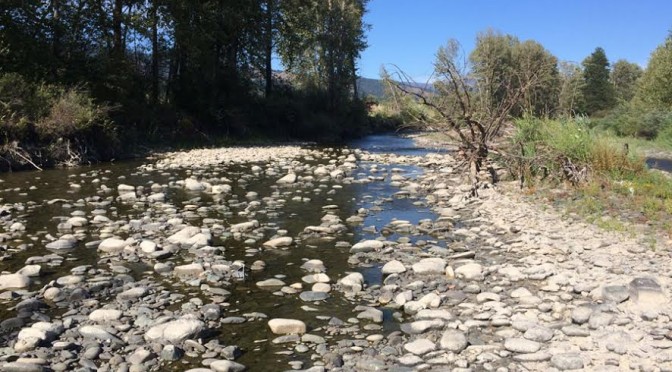
A dry riverbed with scattered rocks under a clear sky.The Yakima Valley is experiencing drought conditions not seen since the 1870s.

Water rights that were among the earliest in the Territory of Washington, to be used for irrigation, have been shut off in tributaries of the Yakima River due to extreme drought conditions.

Flows in Cowiche Creek and the Teanaway River are so dire that 129 irrigators with rights conferred as far back as 1873 must stop watering their orchards, hay and alfalfa crops on some 2,153 acres. Read more about the Washington Drought here: http://www.ecy.wa.gov/drought/

Federal Drought Declaration

The U.S. Department of Agriculture has designated 18 counties in Washington State as natural disaster areas because of the statewide drought. Farmers in these counties will now be eligible forlow interest emergency loansto help defray crop and business losses incurred because of the drought. Eligible counties are: Adams, Benton, Columbia, Douglas, Franklin, Garfield, Grant, King, Klickitat, Kittitas, Lewis, Lincoln, Okanogan, Pierce, Skamania, Walla Walla, Whitman and Yakima.

2015 Drought Disaster Updates

This map shows designations due to drought across the country under USDA’s amended rule. Any county declared a primary (red) or contiguous (orange) disaster county makes producers in that county eligible for certain emergency aid. For a text list of counties designated disaster areas, click here.

On May 15th, Governor Inslee declared a statewide drought in Washington, with the legislature allocating $16 million in funds. Some of those funds are to go towards education.

Washington State Department of Ecology recognizes and promotes Rainwater Collection as part of the solution.To read more about how to conserve water, read he article “Water Smart, not Water short” 5 ways to Secure water for Washington’s Future.

Teanaway River photo courtesy of Department of Ecology
Going from Gray to Green


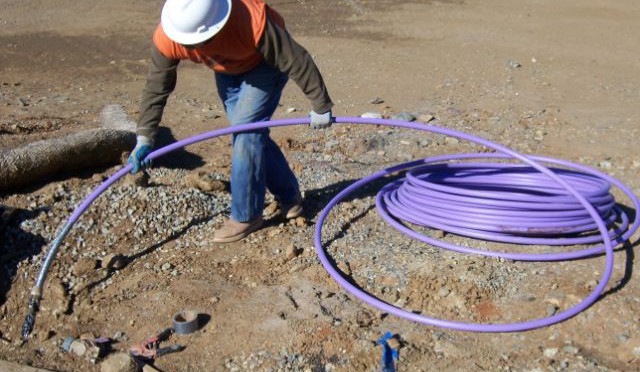
Worker handling purple conduit tubing at a construction site.In one northern California community, an area ravaged by a four year drought, residents are wateringtheir lawns using gray water – water that has been recycled.
Thecommunity of El Dorado Hills has one of the oldest water recycling programs in the state – reusing water for any purpose that doesn’t require a potable standard.

‘”All your shower water, all your toilet water, dishwater, everything that goes down your sinks, comes to this facility and we clean it up,” El Dorado Wastewater Treatment Plant Supervisor of Operations Alan Planje said.

A bonus is that customers save about 35% on their water bills. But another extremely important benefitcomes from the fact that the community saves 4.5 million gallons of drinking water per day, by not wasting it on watering lawns.

“It is part of the culture, when homes are built in El Dorado Hills, they come with plumbing for recycled water,” El Dorado Irrigation District Manger of Wastewater/Recycled Water Margaret Washko said.

Dual plumbing systems are built into each home in the community, one for potable water and apurple pipe system for the gray water to water lawns and even the golf course.

To read and hear more about this story, visit http://www.news10.net/story/news/local/eldorado-hills/2015/07/15/el-dorado-hills-keeps-green-lawns-with-gray-water/30165413/

Photo credit:El Dorado Irrigation District

Should I Collect Rainwater From My Roof ?


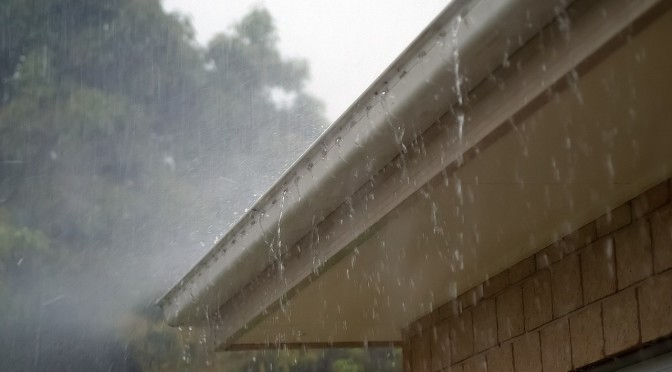
Rainwater flowing off a house roof during a downpour.There are many good reasons for collecting rainwater from your roof. By doing so, you would be helping to protect our rivers, streams, lakes, sounds, bays, and oceans from pollutants entering these bodies of water through stormwater runoff.

Acombined seweris a type ofsewersystem that collects sewage and surface runoff in a single pipe system. Combined sewers can cause serious water pollutionproblems due tocombined sewer overflows, which are caused by large variations in flow between dry and wet weather. This type of sewer design is no longer used in building new communities (because modern design separates sanitary sewersfrom runoff), but many older cities continue to operate combined sewers.

By reducing runoff from our roofs, less water is entering the combined sewer system, reducing amounts of discharge into our bodies of water.

Collecting rainwater from our roofs reduces demand on ourcentralized water systems.

The overwhelming majority of the water used in the U.S. comes from freshwater supplies of surface and groundwater. Water extracted for public systems is treated to potable standards as defined by the Safe Drinking Water Act. Access to high quality water has greatly benefited public health, but it has also resulted in our current system which utilizes potable water for virtually every end use, even when lesser quality water would be sufficient. In addition to conservation methods, using alternative sources of water will be necessary for more efficient use of water resources.

Rainwater collection reduces electrical usage.

According to the EPA’S Rainwater Harvesting Policies, Municipal Handbook, the connection between water and energy is often overlooked, but the process of extracting water from surface or groundwater supplies, bringing it to treatment facilities, treating it to drinking water standards, and delivering it to residential and commercial customers expends energy – primarily because of pumping and treatment costs. The water sector consumes 3% of the electricity generated in the U.S. and electricity accounts for approximately one-third of utilities’ operating costs. Reducing potable water demand by 10% could save approximately 300 billion kilowatt- hours of energy each year. Water reuse systems, like rainwater harvesting, supplant potable water and reduce demand. The reduced water demand provided by rainwater harvesting systems translates directly to energy savings.

Collecting rainwater provides a safe, clean, reliable source of water and has manybenefits available to the consumer.

Rainwater Systems