
When is permitting required for a rainwater collection system in Seattle?
 According to Department of Ecology, State of Washington, collecting rainwater is nothing new. Humans have been doing so for thousands of years. Washington State Department of Ecology began allowing rainwater collection without a water rights permit in October 2009.
In January 2011, King County Department of Health adopted rainwater collection for potable use for detached single-family dwellings. The policy applies to systems intended to capture and store rainwater from surfaces for supply to plumbing fixtures. Systems that supply untreated rainwater to serve non-potable fixtures may be used for both residential and nonresidential occupancies. Systems that treat rainwater for potable use may be used only in detached single-family dwellings.
Rainwater systems are subject to plan review and applicable fees by the Department of Health and the Building Department. Harvested rainwater that is not treated to potable standards may only be used for water closets, urinals, hose bibs, industrial applications, domestic clothes washing, irrigation and water features.
Rainwater collection systems require a water use permit by King County Department of Heath. A non-pressurized stand-alone irrigation system does not require permitting. All pressurized systems do require review and permitting by King County Heath.
Systems for residential, potable use must be designed by a licensed engineer with experience in water systems design, an individual with a group B water systems designer licensed by King County Health, or an American Rainwater Catchment Systems Association (ARCSA) accreditation.
 CanRainwater Collection Protect Water Supplies?
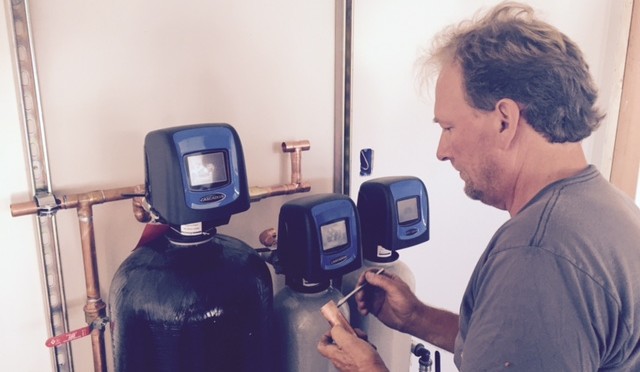
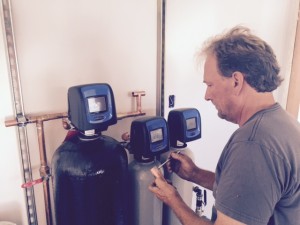 RainBank Rainwater Systems designs and installs custom treatment systems to meet customers’ specific needs.
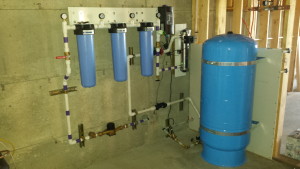 from a nearby freeway would be a concern. Pesticide use from farming or city landscaping maintenance should be considered. Roof material and manufacturing process could pose a health threat and should be addressed – all of which can be corrected with proper filtration, whether it is accomplished with canister elements or back flush devices.