
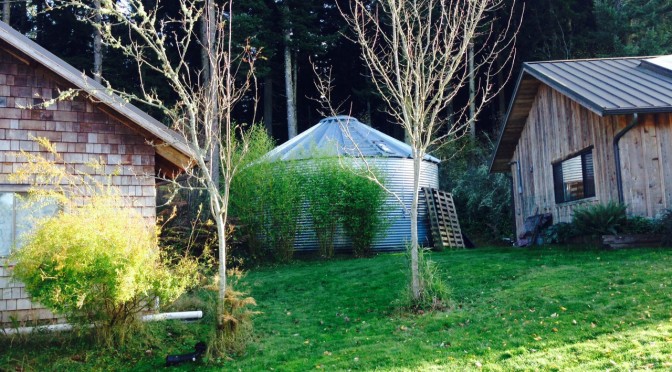
 A well-designed and soundly constructed rainwater collection system, with scheduled ongoing maintenance, will provide years of quality domestic use.
RainBank Rainwater Systems has been providing safe, clean, reliable water for whole house usage for years. Recently, we went to Lopez Island to provide maintenance and inspections forsystems installed over a decade ago. RainBank was established on Lopez Island, WA, and it now has some of the longest running systems in the state. These systems were designed and constructed to provide whole house, potable water usage.
 San Juan County was the first county in Washington State to allow rainwater collection for potable use, due to salt water intrusion of wells like RainBank president, Ken Blair’s system. Low production and higher levels of fecal coliform or nitrates are other factors that have plagued wells in this area.
RainBank Rainwater Systems has been providing ongoing, scheduled maintenance for many of these customers since their installs, while other, do-it-yourself customers have observed and learned how to maintain their own systems. All of these rainwater systems are still providing a viable source of water for whole house usage.
 Seattle based RainBank Rainwater Collection Systems to attend ARCSA conference addressing U.S. Water Supply Challenges.
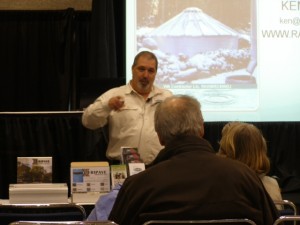 RainBank’s president Ken Blair was tapped topresenta session onUrban Rainwater Collectionand its effects on stormwater runoff mitigation.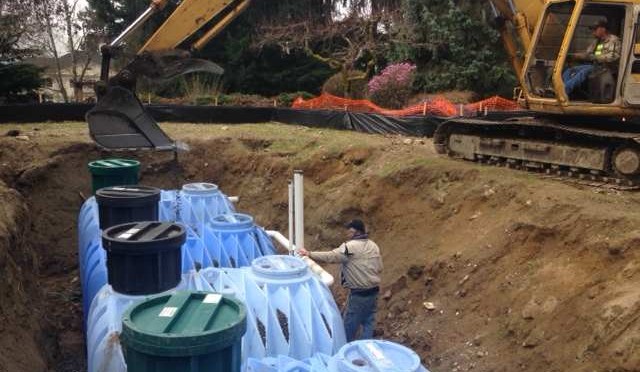
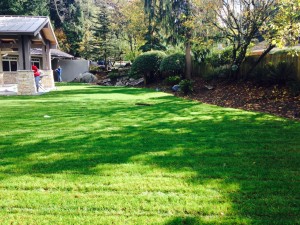
 7,200 gallons of collected rainwater for household usage has no visual impact for this newly constructed Bellevue home. The homeowner wanted to have a rainwater catchment system to provide water for the toilet and laundry facility, but he did not want large, above ground water tanks interfering with the landscaping of his backyard.
 The solution: excavating the old cement swimming pool and placing four 1800 gallon poly water tanks in its place, creating an underground rainwater collection system. All the tanks are connected with a manifold for equalization and supply a pressure tank and filtration in the mechanical room for usage. Solenoid valves provide automatic switching from rainwater to city water if the tanks should run low, but will switch back to rainwater when the tanks receive more water from the roof.