
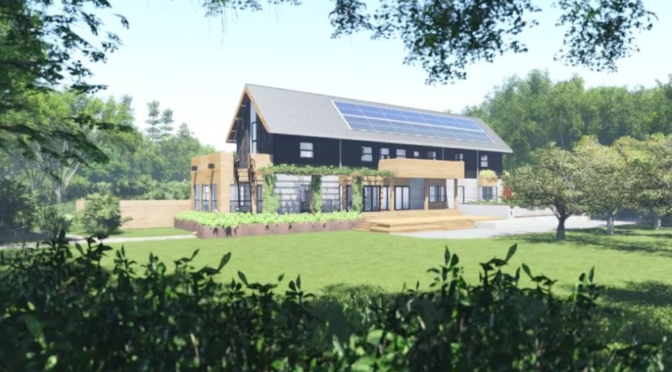
Construction Starts on Bainbridge Island’s Heron Hall


Close-up of a worn, metallic fountain pen nib on a black surface.RainBank Rainwater Systems of Seattle is excited to begin building the rainwater collection system for Heron Hall, on Bainbridge Island.

Heron Hall is the creation of Jason McLennan, who’s bio describes him as: Considered one of the most influential individuals in the green building movement today and the recipient of the prestigious Buckminster Fuller Prize, Jason F. McLennan’s work has made a pivotal impact on the shape and direction of green building in the United States and Canada and he is a much sought after designer, presenter and consultant on a wide variety of green building and sustainability topics around the world. McLennan serves as the CEO of McLennan Design and is the Founder and Chairman of the International Living Future Institute – a leading NGO that focuses on the transformation to a world that is socially just, culturally rich and ecologically restorative.

An Ashoka Fellow, Jason is the founder and creator of theLiving Building Challenge,widely considered the world’s most progressive and stringent green building program. He is the author of five books;The Philosophy of Sustainable Design, The Dumb Architect’s Guide to Glazing Selection, The Ecological Engineer, ZugunruheandTransformational Thought.

RainBank worked with 2020 Engineering’s Mark Buehrer, PE on design of the rainwater collection system, whichwill be the sole source of water for this residence, designedto be one of the world’s greenest homes.

Please watch the video below, and follow along with RainBank’s and Jason’s blogs on the construction of this magnificent home that will be a standard of the Living BuildingChallenge.
Rainwater Harvesting With Architectural Design


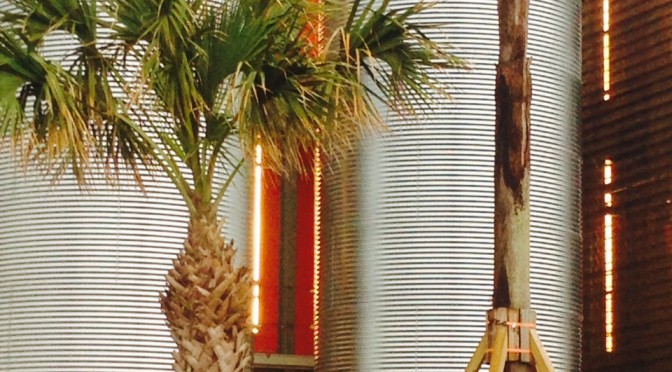
Two palm trees, one healthy and one dried, displayed indoors.It’s important to know how to incorporate the best components into an architecturaldesign while also building an affordable, sustainable rainwater harvesting system.
Here’s what we talked about in Rainwater Collection Can Be Part of Architectural Design:

Rainwater collection can be part of architectural design, adding distinction to a building, bringing awareness to conservation, and letting others learnabout the responsibility of green building practices.

Many new commercial construction projects are implementing stormwater management into their architectural designs, rather than simply meeting new regulations. Building designers and owners are showcasing their commitment to conservation, and incorporating functionality with aesthetics, in turn, this practicefurthers customer and general public interest in conservation and rainwater collection, creating even more public awareness of the need for conservation and sustainable living practices.

“Lead by example”, my father used to say, “and it willinspire others to do the same.” Good advice when trying to do the right thing. Seattle and many other cities are recognizing the importance of rainwater collection as a method of controlling stormwater and are seeingthe benefits associated with doing so.

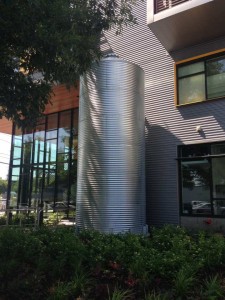
A shiny cylindrical metal sculpture outside a modern building.Other projects that RainBank Rainwater Systems has been involved with include:


  • Sea Scouts building in Galveston, TX (top, left)
  • The Goodwill Building, Seattle, WA (right)
  • Edith Green Federal Building in Portland, OR
  • Federal Way School District, WA
  • Paul Allan’s project, South Lake Union, Seattle
  • Kirkland Safety Building, WA
  • Wallingford Fire Department, Seattle
  • Federal Aviation Building Neah Bay, WA
  • Tacoma School District Tacoma, WA
  • Seattle Arts Academy
  • Puget Sound Energy Seattle
  • Port of Gray’s Harbor, WA
  • Mill Creek Shopping Center, WA
  • Orcas Island School District, WA
  • Fort Lewis (Joint Base Lewis-McChord), WA – and more.

To recap, don’t wait to bring a rainwater harvesting professional into your project. We will work closely with your architect at the outset, to ensure a functioning and affordable water system.

Helping Future Rainwater Harvesting Engineer


View through a circular metal structure to a cloudy sky.Future Rainwater Harvesting Engineer Seeks Help from RainBank

Seattle based RainBank Rainwater Systems receives many requests for information. Some questions come from homeowners building residential systems, others from architects, general contractors and engineers who may be interested in a commercial system design for toilet flushing or irrigation.

Recently we received an inquiry from a high school student in New Jersey interested in rainwater harvesting for a school project on water conservation. He was well prepared with a budget, total square foot of collection area, a plan of usage and most importantly, interest!

Hoping to harness hisenthusiasm, Chad Lindsly, RainBank Engineering, worked with the student on this theoretical design with demand/supply calculations, collection/storage coefficients, conveyance, filtration, costs and return on investments, all through email. He actually instructed the student on how to design a system, while meeting the scopeof his school project. Between them, Chad and the student designed a sustainable, cost effective rainwater system that fell withinthe parameters of the school project’s criteria. The student is turning in his work today and we wish him the best.

RainBank Rainwater Systems has always been at the forefront ofthe advancement of conservation and sustainability education. Chad continues the tradition by paying it forward and taking the time to engage with a potential future engineer.