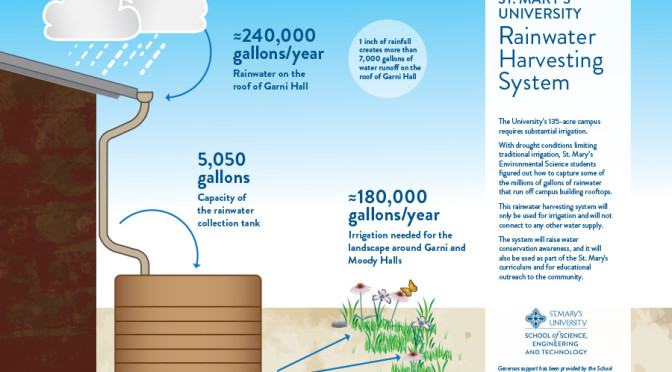
The most common use of rainwater collection is for non potable use. Irrigation, water features, wash down, toilet, and laundry are all non potable uses that can have a positive effect on water conservation. A properly designed and installed rainwater collection system will provide enough water to support these desired uses with less impact on our water supply.
Rainwater is essentially free of pollution, so it can be stored without much more than screening. Storage can be underground, above ground, metal, plastic, or fiberglass. If irrigation is the desired use, keep in mind that approximately .623 gallons per sqft of planting, per week is required for the healthy growth of plants, therefore storage volumes can be a concern in design due to space and costs. Conveyance can be gravity if there is enough head. Head is .4 lbs per foot of elevation. A pressure pump might be necessary to achieve the desired pressure needed. Sediment filtration for a simple irrigation system should be all that is needed to ensure emitters and soaker hoses performas expected.
Water features such as fountains can recirculate the water being used, so very little storage would be required. Sediment and carbon filtration would be neededto keep pumps and nozzles working properly. A carbon filter would be helpful to keepodor to a minimum.
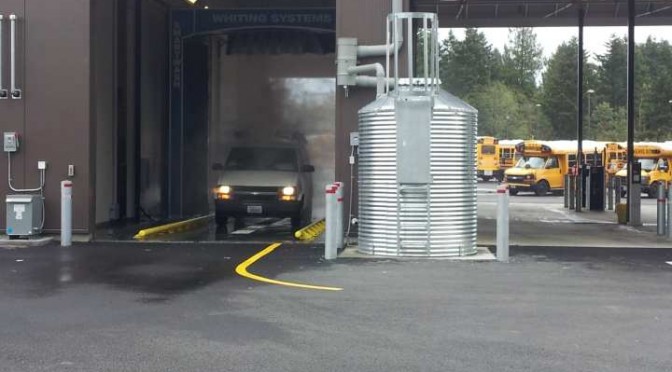
Wash down facilities can use rainwater collection and save money on their water bills by using rainwater collection as the rinse water. With enough storage, a large fleet can be washed with recycled wash water and rinsed with collected rainwater. Again, sediment and carbon filtration would be the only filtration needed. Wash down of equipment,whetherconstruction or farming, can benefit from rainwater collection.
Toilet and laundry facilities for residential and commercial applications are becoming more popular with new construction. Rather than infiltration, which is mandated, why not use that water. Simple pumping and filtration of stored water is all the treatment needed. A return on investment can be achieved within a few years.
There are a wide range of uses for rainwater collection. With a little bit of imagination you mightcome up witha use for rainwater collection that could save you money.

 The lingeringand controversial California drought has unearthed some interesting viewsabout how we prioritize how we usewater. What if there was a way to conserve drinking water and STILL have enough to water our drought thirsty lawns or washlaundry – or to clean trucks in a commercial facility?