

 You live in Seattle,where space is at a premium. You may not have a large lawn for tank placement, but you still want to live sustainably. You’ve already reduced your household and business energy usage and you recycle and reuse products to extend their life. So, how can you capture a vital resource by collectingrainwater in Seattle’s tight living space?
- Just like rural homeowners, urban households can benefit from rainwater collection.Unlike rural homes, most city homes have less space available for storage. Slim line water tanks and underground storage options allow those who live in an urban environment to collect, store, and use rainwater for a number of purposes.
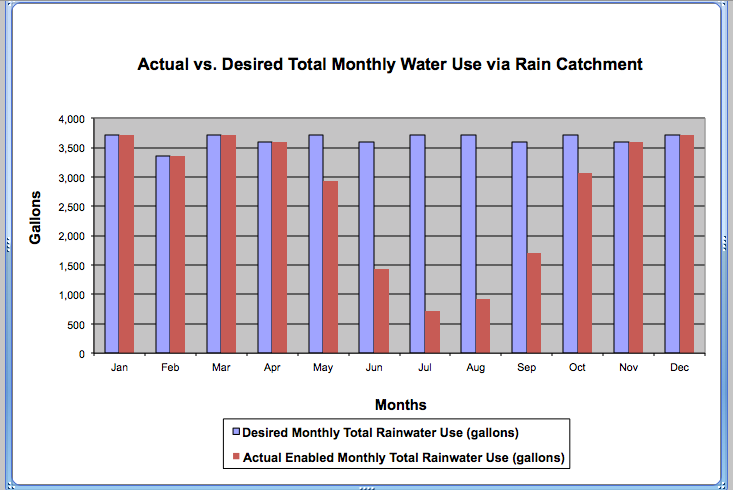
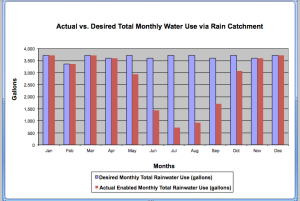 You do not need a lot of storage capacity for supplemental use of rainwater.For every inchof rainfall, a thousand square feet of surface will yield 623 gallons of water. A 2,000 square foot roof in Seattle will yield over 44,000 gallons of water annually. Even with only 3,000 gallons of storage, winter use can be as much as 100% or can be stored for summer irrigation demands. See chart below –an average 2,000 square foot roof yields over 44, 000 gallons with only 3,000 gallons of storage capacity based on 120 gallons of daily demand. (click the image for larger view)
- Rainwater is a clean source of water that needs very little treatment for irrigation, toilet flushing, or laundry facilities.Further treatment with UV disinfection allows forwhole house demands including drinking water. With more demands on our water districts due to drought conditions, every drop helps. Why not benefit from this natural resource, rather than send it down the curbside drain?
It is possible to further your conviction to live a sustainable life with rainwater collection. The investment can pay off not just for you, your family, and your business, but for all of us who seek to make the best use of rainwater, a vital resource.
This article was originally published under the title How Can Urban Homes Benefit From Rainwater Collection?

 The Rainwater collection industry is rapidly becoming more accepted, consumers are becoming more aware of water shortages, quality of water, and increasing costs of operations of a centralized water system are being passed onto the customer. Many are turning to a supplementary source of water, whether from a simple rain barrel, for small irrigation needs or a large-scale sustainable system for whole-house demands. The industry itself is changing and becoming more complex. States and counties throughout the US are witnessing such a rapid growth in interest of rainwater collection, many are struggling with regulations and standards to ensure public safety. In addition, increased demand is beginning to outpace the supply of available, qualified RWC system designers and installers. Without proper regulations standards, improper designs and installations by unqualified persons can lead to underperforming or even dangerous systems.
 The
The