
Tag Archives: featured

Rainwater Collection Reduces Dependence on City Water in Seattle


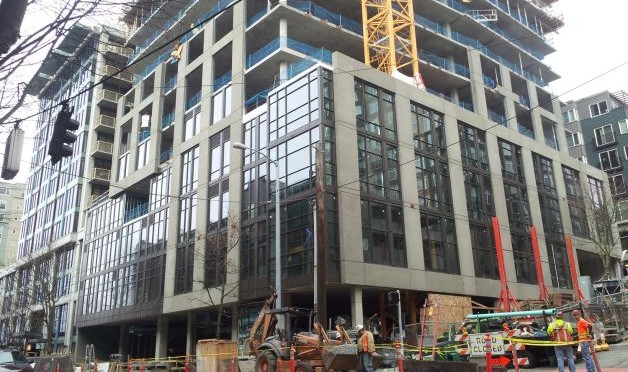
Construction site of a modern glass building with cranes and workers.As anyone wholives in Seattle can see, there is a massive amount of rental construction happening. With the growth of the South End of Lake Union and the Ballard area, over 23,000 units are expected to be added in the next few years.

A cultural shift in water conservation with simple technology can reduce the amounts of water usage through more effective water management practices. While the “Green Storm Water Infrastructure” or GSI mandates that runoff from impervious surfaces is to be infiltrated on site, other innovative and effective technologies are crucial in reducing the need for upgrading and expansion of sewer and centralized water systems.

Think of the reduction of the amounts of water coming off our roofs into stormwater if we diverted that water to usage such as toilet flushing and laundry facility. This practice could reduce runoff by as much as 50% in high density housing complexes, while saving hundreds of thousands of dollars that would be used to meet the demand.

Bio swells and rain gardens do very little for infiltration during the rainy periods when the ground is already saturated. Rainwater collection used for toilet and laundry facility could be using that water during those months rather than having it overflow, and it would reduce the run off during those periods. The end product would be reduction of storm water runoff, less dependence on city water and its infrastructure, cost savings to the building owner and tenants, better use of our natural resource, while reducing pollutants inour waterways.

Photo: Aubrey Cohen, Seattlepi.com
Rooftop Rainwater Harvesting is Simple and Cost-Effective


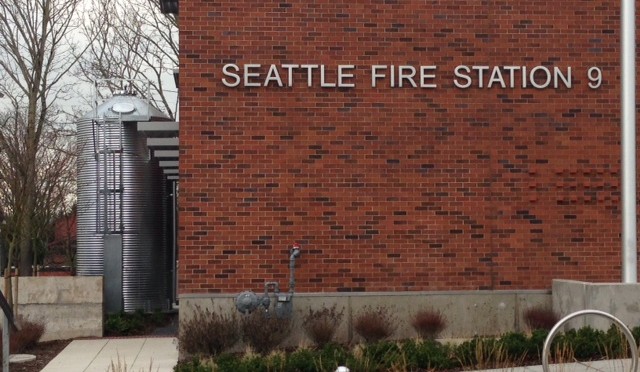
Brick building labeled Seattle Fire Station with surrounding plants.The report referenced below comes as the Environmental Protection Agency is in the process of updating its national standards for controlling runoff pollution from new development with regard to rainwater harvesting.
“As America’s expanding urban areas struggle with major water supply shortages and runoff pollution problems, capturing rainwater from rooftops provides a tremendous untapped opportunity to increase water supply and improve water quality” according to a recent analysis by the Natural Resource Defense Council (NRDC)

In the Seattle, area roof runoff is already mandated by the Federal Green Storm Water Infrastructure (GSI) for all new construction to disperse all impervious surface run off on site.

Don’t forget to check “Notify me of new posts by email” below to receive blog post updates in your inbox.

How does Residential Rainwater Collection Affect Streams & Salmon Habitat?

How does Residential Rainwater Collection Affect Streams & Salmon Habitat?

How does RWC for sole source residential domestic water effect our streams and salmon habitat?

In accordance with Washington State’s instream rule restricting new wells in the Skagit River Basin, some land owners are pursuing rainwater collection as their sole source of water to achieve a building permit. There seems to be gridlock between the Department of Ecology, local tribes, land owners, and the county planning department. Aquifer recharge, instream flow, and salmon habitat are the concerns being discussed. Past studies have shown that rainwater catchment for domestic sole source residential use enables rainwater to infiltrate into the aquifer and benefits the creeks, streams and rivers.

Typically there is more concern with summer rain than winter. According to a 1981 Water Supply Report for Jefferson County “Actual evapotranspiration (portion of water lost to the air or used by plants) exceeds soil moisture utilization.”

In a study, “analysis if rainwater catchment in WRIA 17”, by Kurt Unger PHD. Dept. of Ecology Washington State., “Aquifer recharge occurs predominately in deforested or partially deforested areas due to evapotranspiration rates.”

Ground water is more enhanced by collecting rainwater, it’s domestic use, then recharging the aquifer by a leach field. This is most important during the summer months do to evapotranspiration. Mr. Unger goes on to say ” Given the above analysis, it is the author’s opinion that building permits issued in the WRIA 17 based on rainwater catchment as sole source of supply will not pose a threat to streams. In fact such catchment systems will likely provide hydrological benefits.”

Click here for more information on the WRIA 17 study.

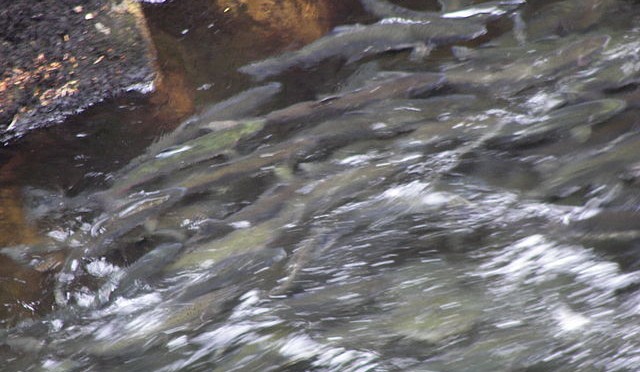
Salmon swimming upstream in Ketchikan Creek courtesy of Wknight94