
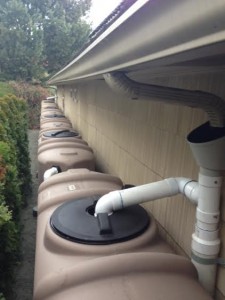
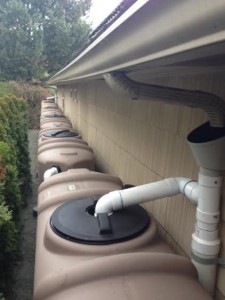
 Rainwater collection is becoming increasingly popular for commercial andresidential consumers in urban settings, driven largely by centralized waterunable to meet demands caused by droughts, increased population, along with supplyand demand.
Quality of water is threatened by an aging infrastructure and environmentalconcerns such as the chemical spill in West Virginia last winter. Awareness and concerns of fluorides and chlorine in municipal water supplies areadding to the interest of alternate solutions.
Increased costs to meet storm water management and GSI (green storm waterinfrastructure ) requirements for new construction of commercial andresidential projects are driving owners, designers, engineers, and architects to offset some of the costs involved with implementation.
In a recent report by “the National Resources Defense Council” eight citieswere studied for potential economic impact of rainwater collection. It is estimated the residents of these cities could save 90 million dollars eachyear by adopting simple rainwater harvesting techniques.
Water closet and laundry facilities using rainwater collection are nowbecoming integrated into designs for both commercial and residential application. According to the American Water Works Association,water closetsaccount for approximately 51% of water usage in commercial buildings and approximately 50 % water usage for water closet and laundry facilities inresidential applications.
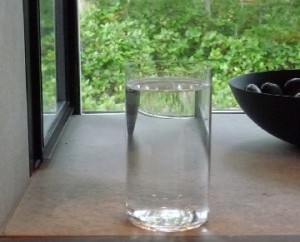
 Sanitization seems to be a most elusive and complicated topic in Rainwater Harvesting for the homeowner, as well as for the designer or operator. There are no general definitive answers as to what deviceor treatment is appropriate for all systems. The main question is “When is my water safe to drink?”
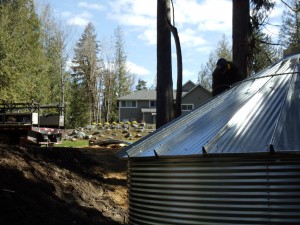 Many King County rural homeowners and farms are finding that rainwater collection as supplementary to their wells or community water systems is helpful in limiting overuse of their water supply.
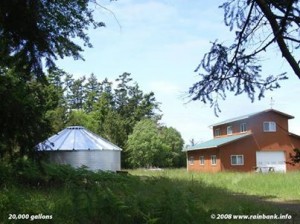 The return on investment of a rainwater harvestingsystem for a farm can be as little as 3 years, saving thousands per year on water costs.