
This is the final post on “How to Build a Rainwater Collection System. Click to see partsone,two,three,four,five,six,sevenand eightof “How to Build a Rainwater Collection System”.
There will be additional posts that elaborate on some key points in the near future, so stay tuned (click the box below to receive new posts in your email inbox).
 The final stage of treatment for a potable rainwater collection system is ultraviolet light disinfection (UV). Effectiveness of the UV system is determined bya few factors. First, pre-filtration, which includes a sediment filter and a carbon filter that need to be upstream of the UV. This will help ensure the clarity of water entering the UV chamber, enabling the UV rays to penetrate the water stream.
When UV energy is absorbed by the reproductive mechanisms of bacteria and viruses, the genetic material is “rearranged” and can no longer reproduce, with risk of disease eliminated.
There are 2 classifications of UV light determined by the dosage of the UV light itself, and a class “A” UV is the only class recommended for disinfection of rainwater collected from a rooftop.
The American Water Works Associationdescribes a class A ultraviolet system as an effective method of disinfection for water that is not determined safe to drink. A class B ultraviolet system is only effective for water already deemed safe to drink – such as a water source already treated with chlorine.
An alarm and or solenoid valve for system fail safe is always a good idea to include with your UV system. This method will shut down the system or sound an alarm if a sensor determines the water turbidity (clarity) is not sufficient for proper UV absorption.
Ultraviolet light is a natural, cost effective environmentally safe method of disinfecting drinking water as long as it is properly maintained and the bulb is changed according to manufacturer’s recommendations.
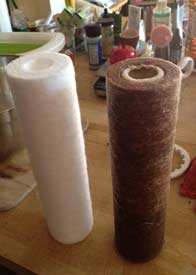
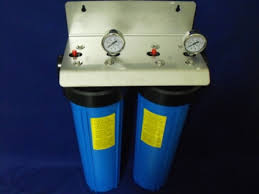 For non potable, toilet flushing and laundry facility systems,it is recommended to add a 10 Micron carbon filter. This filter will remove organics and inorganics, color and odor from you stored rainwater. By having the cheaper 5 micron sediment filter upstream of the more expensive 10 micron carbon filter you will save money by not fouling the carbon filter with particulate less than 5 Microns. Depending on how much use for this type of system, a 4″ x 20″ cartridge will mean less changing of filtration. If the system is to be shut down for a lengthy period, it is recommended that filter cartridges be removed so water will not become septic by decaying bacteria.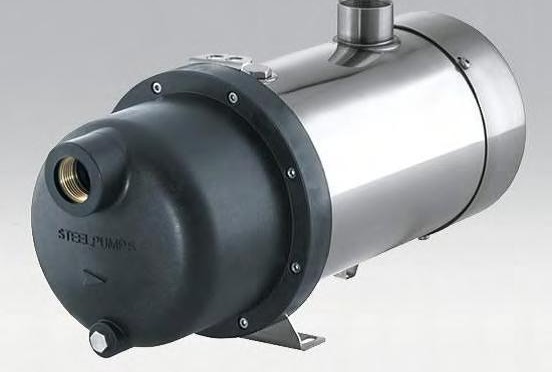
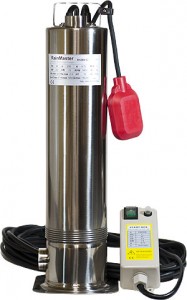 Either a submersible pump or centrifugal pressure pump will be required to transfer water from storage to filtration and use. A submersible pump will need means of regulating flow.
 The most common method of conveyance would be a booster pump. These pumps are generally centrifugal pumps and can be placed in the mechanical room or well shed. A centrifugal booster pump is used without an exterior pressure tank and is considered an “on demand” pump, meaning that when the faucet is opened, the pressure in the pump drops down to low pressure – usually 20 PSI, and the pump will start running and maintain constant pressure while the faucet is open. Once the faucet is closed, the pump will continue to run until it meets its high pressure cut off.