All posts by RainBankAdmin

Is Your Water System Contaminated?


Close-up of a worn, metallic fountain pen nib on a black surface.You finally planted that garden you’ve always wanted and your first crop has made it to your family’s table. Now you learn that your public water system is contaminated – and has been for years. Your beautiful tomatoes, green beans and peppers have been cultivated with contaminated water.

When we read that thousands of public water systems in the US, affecting millions of people, have unhealthy levels of lead and copper, we should be concerned about the laws in place that are supposed to protect and preserve the health and well-being of our nation’s citizens.

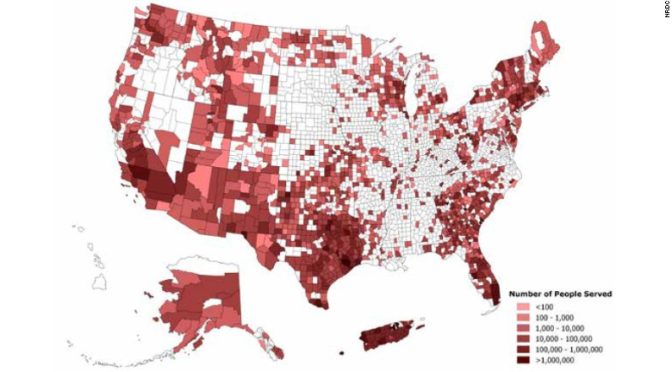
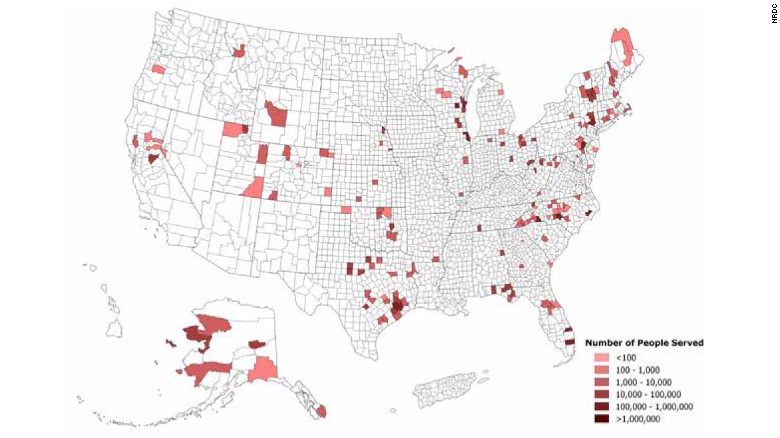
According to CNN, “More than 5,300 water systems in America are in violation of the EPA’s lead and copper rule, a federal regulation in place to safeguard America’s drinking water from its aging infrastructure.”

The story goes on to report, “Violations include failure to properly test water for lead, failure to report contamination to residents, and failure to treat water properly to avoid lead contamination. Yet, states took action in 817 cases; the EPA took action in just 88 cases, according to NRDC’s report.

What’s worse, the report reveals that the EPA is also aware that many utilities “game the system,” using flawed or questionable testing methods in order to avoid detecting high levels of lead.

That means there could be many more communities violating the laws, exposing residents to dangerous levels of lead. And the public has no idea.”

The article reports that 18 million people currently reside in areas with water systems that don’t meet legal standards AND the EPA is not addressing these violations.

Is your water contaminated?
Can You Drink Rainwater?


Close-up of a worn, metallic fountain pen nib on a black surface.Can you drink rainwater?

Despite increasing awareness aboutrainwater harvesting and its benefits, there is still word to get out about how and why collecting rainwater makes sense in a world where resources are limited and sometimes nonexistent. Whether due to drought conditions or aging infrastructure, millions of people around the world don’t have access to safe, clean drinking water. Here is an article, originally published in June 2014, titled Is My Rainwater Safe to Drink?

Sanitization seems to be a most elusive and complicated topic in Rainwater Harvesting for the homeowner, as well as for the designer or operator. There are no general definitive answers as to what deviceor treatment is appropriate for all systems. The main question is “When is my water safe to drink?”

Presently, thousands of people die or become gravely ill due to lack of clean water throughout theworld. Rainwater is generally a safer potable source than surface water; however it may carry pathogensthat could pose a health risk.

RainBank has published a free article to help you determine when your rainwater is safe to drink. Click herefor a free download to the entire article and don’t forget to check the box below to receive new posts via your inbox. Of course, if you have questions – contact us – our team willrespond to your inquiry within 48 hours. You can also find RainBank on LinkedIn,FacebookandTwitter.

Toxic Chemicals Taint 8 Alabama Public Water Systems


Close-up of a worn, metallic fountain pen nib on a black surface.Recently, the EPA set a stricter health advisory fortoxic chemicals perfluorooactanoic acid, or PFOA, as well as forperfluorooctane sulfonate, or PFOS, once made or used at factories near, and thereby affecting8Alabama public water systems.

Residents and businesses in the affected area are scrambling to procure bottled water for their families and customers this summer, as a $4 million temporary filtration systemisn’t expected to be completed until September.

The Wall Street Journal reports, “Factories for decades used PFOA as a plastic coating to make consumer products such as Teflon nonstick pans, waterproof jackets and pizza boxes.PFOS was used to make stain resistant carpets and other products.A multiyear medical study in the 2000s of 70,000 people near a plant in West Virginia that made PFOA found “some suggestions” of “probable links” between high exposure to the chemical and illnesses, including cancer. Studies have found PFOS to be harmful to the immune systems of animals.”

After long-term exposure to these toxic chemicals, what does this mean for area folks with gardens, restaurants, families? How will this affect the natural balance of wildlife in the area? We have no answers; only time will tell.

Read more at the Wall Street Journal

Read more at Alabama.com

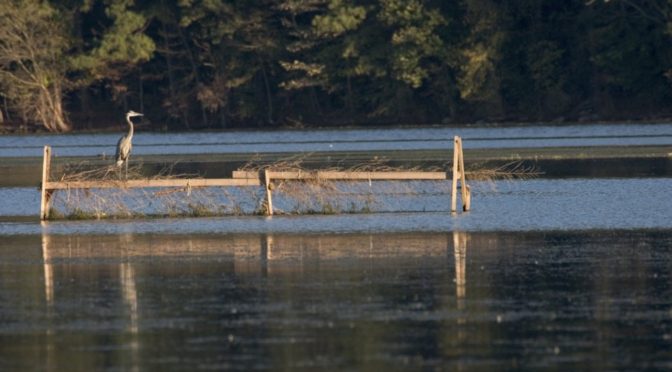
Photo credit: A great blue heron on the Tennessee River. (Photo by Beth Young, courtesy Tennessee Riverkeeper)