
 With the cold weather upon us, many rainwater systems need to be winterized.
Most whole house use rainwater collection systems are frost protected when installed, due to their use in the winter months. But, if your rainwater system is used for irrigation only, or if you have a simple rain barrel system, winterization is an important maintenance task that should be addressed before the cold weather hits. Broken pipes can lead to draining your cistern empty, or possible damage your pressure pump. Costly repairs or replacement of components can be avoided with little planning.
Be sure your pipes are not exposed to the weather by insulating, or draining. If draining, be sure to leave the valves open afterward. You can temporarily cover pipes with straw or hay if necessary.
Drain the pump of all water – including what is in the expansion tank, leaving thisvalve open, too.
Be sure to inspect your first flush device “dribbler valve” to be sure it is clear of obstructions so it will operate correctly.
Inspect systems to be sure there are no leaks from cisterns and that your gutter system is clean and ready to collect rain for spring and summer use.
Simple steps can be taken to insure your rainwater collection system will be operational for the next season and that you are collecting water during the winter months.
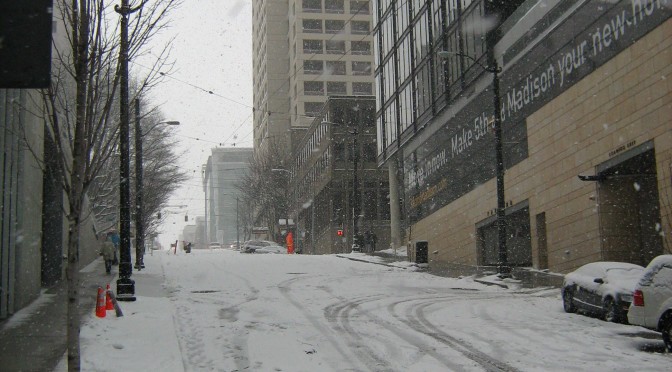
Snowy Street Downtown Seattle courtesy of Ekaune
 With the new “Green Storm Water Infrastructure” or
  Cement water tanks are not naturally waterproof; cracks in concrete can resultyears after construction. The use of a liner, whether spray on epoxy, or a poly bag will prevent groundwater from entering the water tank as well as improve water quality.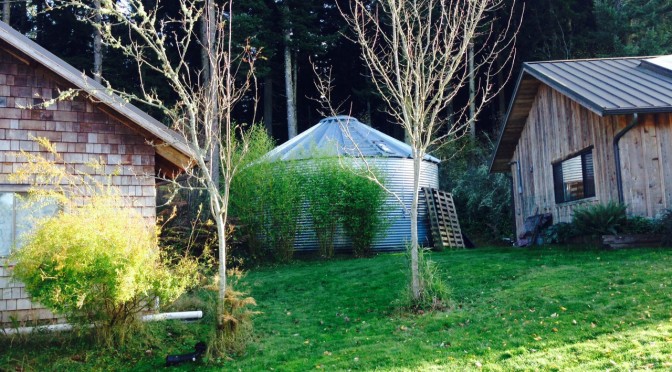
 A well-designed and soundly constructed rainwater collection system, with scheduled ongoing maintenance, will provide years of quality domestic use.
 San Juan County was the first county in Washington State to allow rainwater collection for potable use, due to salt water intrusion of wells like RainBank president, Ken Blair’s system. Low production and higher levels of fecal coliform or nitrates are other factors that have plagued wells in this area.