
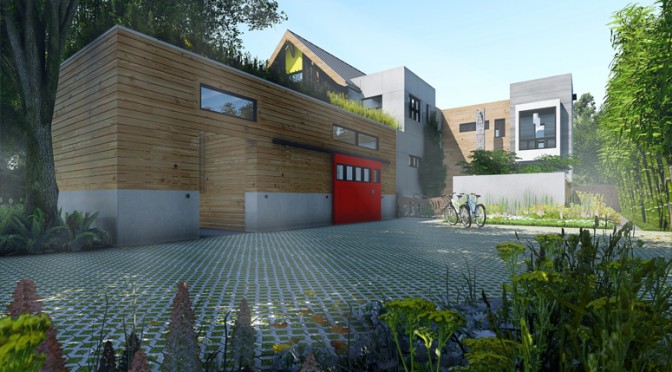
 RainBank Rainwater Collection Systems principal Ken Blair is pleased to bea member ofthe Engineering and Consultant Team for Jason McLennan’s Heron Hall, aliving building homeon Bainbridge Island, WA.
McLennan is the CEO of the International Living Future Institute, a non profit organization behind the world’s most progressive and stringent green building guidance system. He is the creator ofthe Living Building Challenge and heads Cascadia Green Building Council, the Pacific Northwest chapter for the US Green Building Council and the Canada Green Building Council.
Here, Jason speaks about the living building challenge:
For McLennan, “it’s not enough for architects, construction companies, and real estate management companies to focus on reducing their environmental impact.The time is right to be far more ambitious, think instead about recharging and replenishing our planet“, explains Jason.
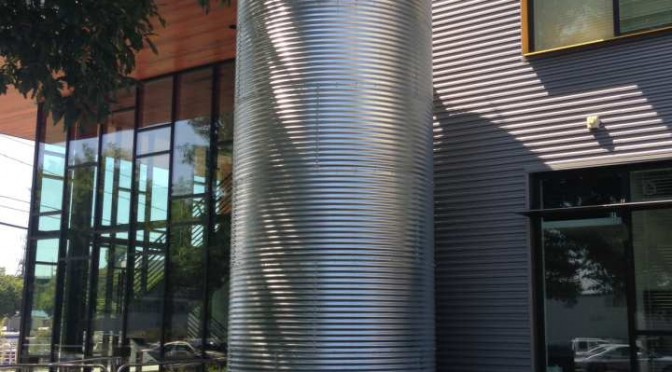
 We recently discussed
  Commercial irrigation demands are significantly higher than residential,requiring much larger storage capacities. Landscaping of a commercial building can be extensive. The use of drought tolerant plants, swales and rain gardensare becomingincreasingly popular. New construction is required to infiltrate or use roof runoff. Rainwater collection can offset costs of expensive infiltration and cut municipal water supply usage.
 The larger roof area of a typical commercial building will produce a large amount of water. If one square foot of surface area receives .623 gallons of water per 1″of rainfall, a 20,000 square foot roof will yield approximately 12,460gallons per 1″ of rain.If 1″ of rainfall is required for the healthy growth of plants and 1 square foot of surface areareceives .623 gallons per 1″ of rainfall, a 4,000 squarefoot area would require 2,492gallons per week or 29,904gallons stored for the 3 month dry period.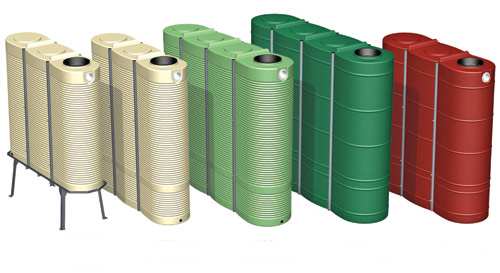
 We recently discussed
 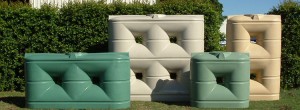 Sizes and dimensions very from each manufacturer and most manufacturersoffer cylindrical and slim line style tanks. Slim line designs are better suited for tight areas along side the house. While box tanks with their low profiles are best suited for under decks. A cylindrical tank needs some space, but offersthe most bang for your buck with higher storage capacities, requiring fewertanks for larger storage needs.