
 We recently discussed key factors in designing a rainwater collection system and briefly discussed intended uses such as irrigation, toilet and laundry facility, and whole house usage including potable.Let’s take a look at designing a residential rainwater collectionsystem for irrigation based on storage capacity.
For ruralapplications with more available space for storage, this can be achieved with large tanks. However in an urbansetting where space is limited, the designer must take into consideration not only the planting area, but also available space for storage.
Most horticulturists will say that for the healthy growth of plants, one inch of rainfall per week is required. If one square foot ofsurface area receives .623 gallons per inch of rainfall, we can size usage and equate that to storage needed.
For example: 200 sq ft of planting area requires 124.6 gallons per week for irrigation or 1495.2 gallons stored for 12 weeks of dry season.
Now let’s look at space required forstorage of 1495.2 gallons. Considering 7.48 gallons per cu ft,1495.2 gallons = 199.89 cu ft.
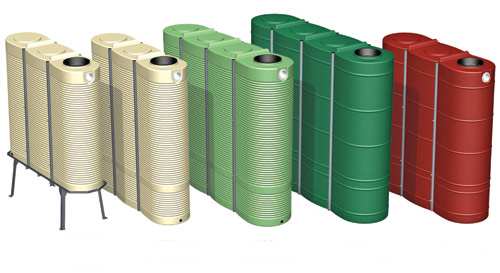
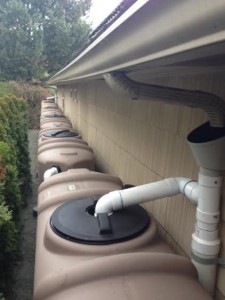
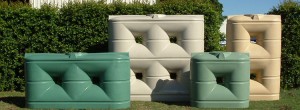 Sizes and dimensions very from each manufacturer and most manufacturersoffer cylindrical and slim line style tanks. Slim line designs are better suited for tight areas along side the house. While box tanks with their low profiles are best suited for under decks. A cylindrical tank needs some space, but offersthe most bang for your buck with higher storage capacities, requiring fewertanks for larger storage needs.
Sizing your storage for 3 months of dry season, like we experience in the Seattle area, is dependent on area of planting and available space for storage. Both need to be considered for a successful design.
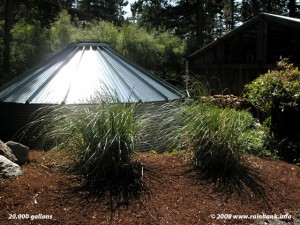 Whether you are designing your own rainwater catchmentsystem or having one designed by a professional,success of your rainwater catchmentsystem design is dependent on some key factors.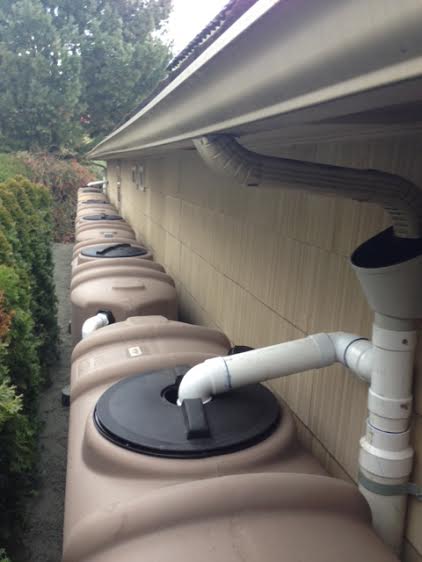
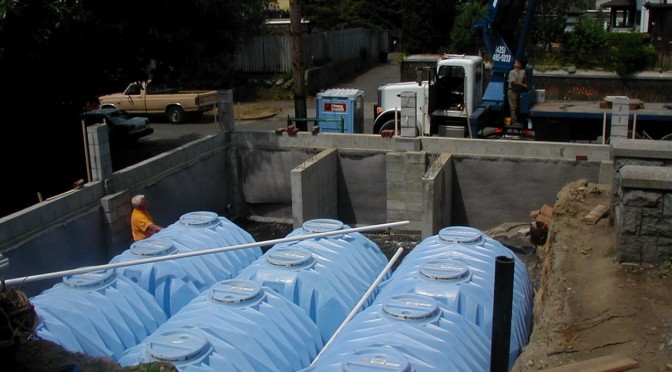
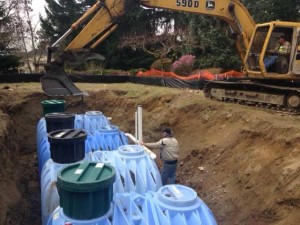 New stormwater regulations forrunoff and green storm water infrastructure are adding to the costs of new residential and commercial construction in Seattle and elsewhere. Infiltration of runoff from roofs, driveways, and all impervious surfaces are mandated by local and Federal agencies. While infiltration does help reduce storm water runoff, the added costs of implementing infiltration or a rain garden can be considerable, with no return on investment for the home owner or building’s owner.
 While the average monthly billing increases are not enough to pay for a rainwater catchment system, the costs of designing and implementing an infiltration system or a rain garden are significant enough that if redirected to designing and building a rainwater collection system along with lower water and sewer bills, a homeowner or building owner will recognize a return on investment.