

RainBank’s president, Ken Blair, offers educational rainwater harvesting seminars to schools, community groups, engineering and architectural firms. Do you want to learn about rainwater harvesting?
Your group or organization can learn about laws, codes, and general use of harvested rainwater. Various rainwater collection techniques, methodologies, and components can be covered in RainBank’s seminars. If your school, community organization, landscaping company, architectural or engineering firm wants to learn about rainwater harvesting, Kenwill tailor the presentation to your questions and needs.
Passionate about having a positive impact on the environment and dedicated to helpcreate grassroots solutions for rainwater collection for consumption and agriculture, Ken has more than 10 years of practical application in the Pacific Northwest designing and installing rainwater catchment systems. RainBank has designed and installed 100 potable residential systems in Washington State and is an accredited professional member of ARCSA (American Rainwater Catchment Systems Association).
Ken has taught water conservation and the natural cycle at the elementary school level. Community groups can learn how single family homes can supplement their city water usage, architects are being asked to incorporaterainwater water harvesting in residential home designs and engineers are including systems for commercial applications.Ken Blair has been a speaker at the ARCSA convention in Portland, Oregon and has been mentioned or quoted in articles from Net Zero, Commercial Builders Magazine, and was highlighted in ARCSA Accredited Professional (AP) Profiles. Photos of RainBank’s water tank installations are featured on Washington State Department of Ecology website (look for slideshow in right hand column).
Ken’s experience, insight and ongoing education can assist your group, company or organization in making informed decisions about rainwater harvesting.
Would you like to invite Ken to conduct a seminar for your group? Please complete the form below.
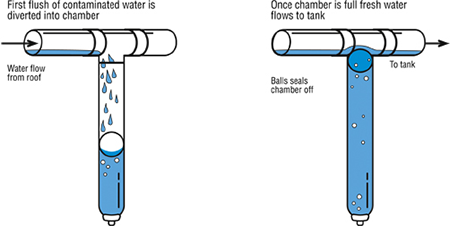
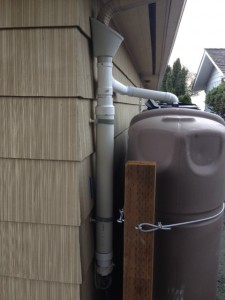 A first-flush diverter helps keep your rainwater harvesting system clean byenabling the removal of dust, other debris, and any fecal matterthat collects on your roof and in your guttersbetween rainfalls, so it is flushed out at the verybeginning of the water collection process.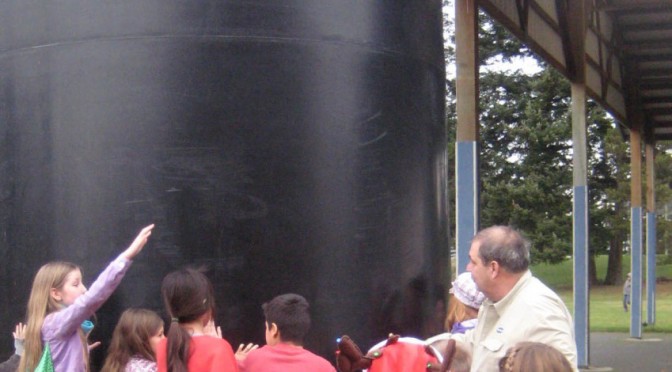
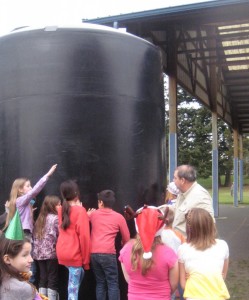
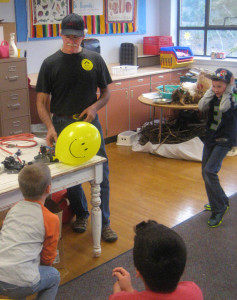 Ken taught a little history of rainwater collection, some science on the natural cycle of rain and a bit of math so the children could calculate how much rainwater they could collect from their home roofs. Each class will make rain gauges so they can monitor how much rain is available to fill their storage tank that RainBank installed last year for their garden-to-lunch program. “I think the children took away the need for them to conserve our resources and I am confident that they will go home and teach their parents. It was a great bunch of kids and I look forward to doing more of this”, adds Ken.