
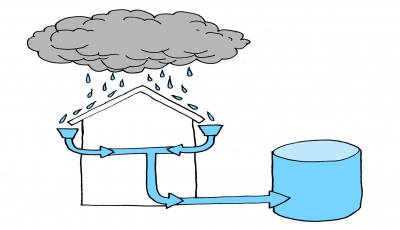
Rainwater collection is growing inpopularity in the United States, including here in the Seattle area. Many commercial and residential new construction projects are discovering that rainwater collection can save costs on complying withthe mandated GSI (greenstorm waterinfrastructure) of infiltration on site while saving water use and energy at the same time.
Treatingwater for potable standards is not energyefficient formunicipal water districts. Even though water is cheap for the consumer, it doesrequire high costs to maintain this levelof quality to potable standards. Thereason the costs are low to the consumer is because of the large amounts of water being sold to manufacturing and farming. On a large scale, reducing the energy needed by using untreated water for toilet flushing and laundry facilities could reduce the costs of water from these water districts. Imagine the reduction of energy saved if all commercial new construction implemented RWC for this use only.
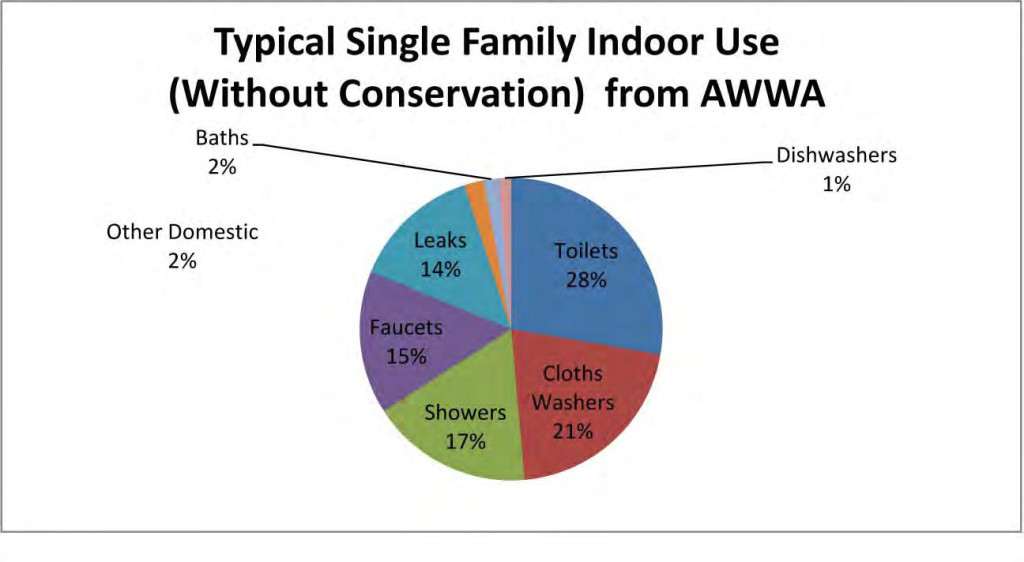 Based on thischart from the American Water Works Association (AWWA) toilets make up28% of residential water consumption without conservation and laundry 21%. The use of highefficiency toilets, washing machines and low flow devices will reduce the amounts even more. A simple rainwater collection system for toilet and laundry will reduce household demand ofmunicipal water by 49%. Imagine the savings on a larger scale forenergy,storm water runoff, depletion of ouraquifers, and demands on a centralized water system.
Every drop of water is important and we can make smart choices about where every drop goes.
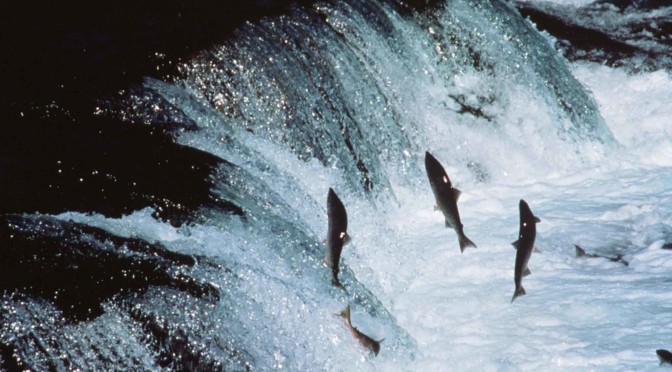
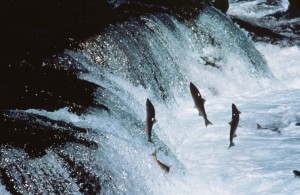 The ongoing battle of water rights continues in Skagit County – with Senate Bills 5129, 5136, & 5407 introduced by Republican Senators Bailey & Pearson. The bills, if passed, would repeal some in stream flow rules from the original 2001 ruling.
 The Albuquerque Water Authority andthe New Mexico Water Collaborative have partnered to launcha pilot project intended to help residents make better use of rain, rather than allow it to drain away, giving themthe opportunity to repurpose collected rainwater for landscaping.