

 With an average annual rainfall amount of 37.5″, the Seattle area is an ideal environment for rainwater collection, since Seattle area households see a moderate climate compared to other cities in the United States. Summers are generally short and winters are fairly moderate.
Let’s take a look at an average 2,500 sq. ft. home in Seattle, which can easily sustain itself while using rainwater collection for whole household use.
Autumn rainfall averages around 11.55″, filling tanks from the past summer’s use quickly with 17,911 gallons of water available for collection. Winter averages are around 14.42″ or the equivalent of 22,459 gallons available to keep tanks full. Spring continues with 13,036 gallons from an average of 8.37″, allowing levels to remain high. Even summer at an average of 3.15″ or 4.906 gallons available should keep tank levels from going dry to be filled again in the fall.
 Depending on use, an average Seattle home can sustain itself on harvested rainwater without any change in lifestyle for the residents. The average demand from one occupant is 35 gallons per day or 1,050 per month -not including irrigation. Being connected to city water allows for a back up supply. Even with a small amount of storage, a supplemental system can conserve city water supplies and save money, by providing full usage during the wet periods. Future weather patterns predict wetter warmer winters and hotter, dryer summers. A look a last year’s averages on the above graph suggests this to be true. Rainwater collection is a perfect fit for Seattle residents whether non-potable or potable use is desired.

 While you cannot disconnect from most municipal water supplies in Washington State, you can include a non-potable rainwater collection system as a supplementary sourcestatewide.
 Storage for domestic, household use (potable) is required by code to be
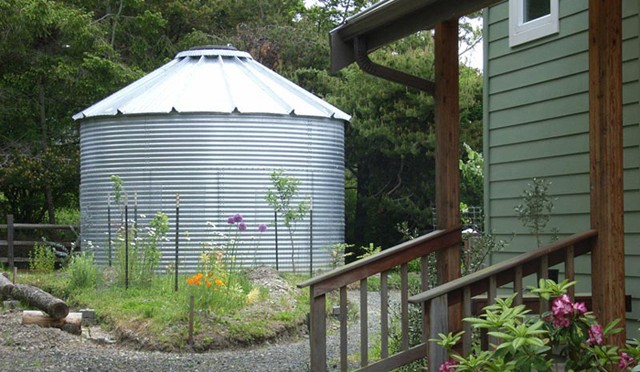
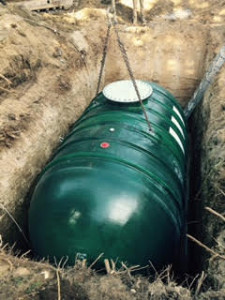
  Water tanks can be steel, polyethylene, fiberglass, or cement. There are bladder-type pillow tanks that can be placed in crawl spaces or buried tanks that have zero visual impact. Bolted together, galvanized steel water tanks have a liner inside the tank, while the steel shell provides protection and structure for the liner. Polyethylene (plastic) water tanks are the most cost effective. Additional tanks can easily be added in the future. Slimline tanks or Box tanks can be used for
 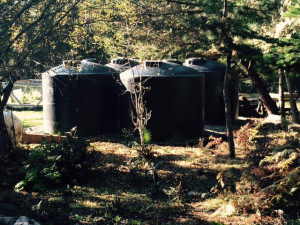 Installation requirements, codes, durability, warranty, and volume, should be considered as well.