Tag Archives: featured

Rainwater Collection for Potable Use in an Urban Environment


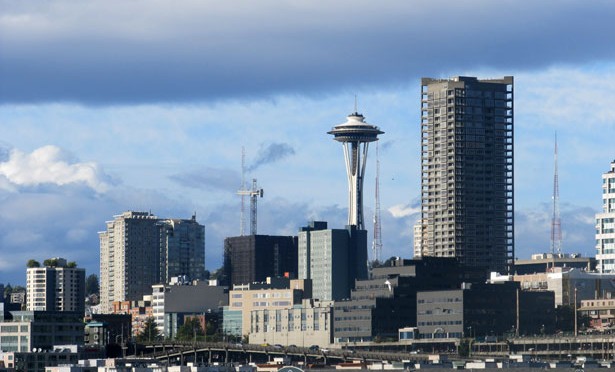
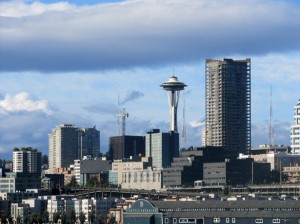
Seattle skyline featuring the Space Needle under a cloudy sky.Supplementary whole-house use of rainwater in an urban environment is more complex than collecting for potable use in a rural environment. In a rural environment, there is typically more room for storage, allowing the homeowner to store more water than that inan urban setting.

The larger question, however, is – what is landing on my roof and how do I know my collected water will be safe to drink?

In a rural setting, organics are what you need to filter out before the water is to be disinfected and considered potable. A sediment filter, followed by a carbon filter prior to ultraviolet disinfection can achieve this. Bird droppings are the primary concern in this situation.

In an urban environment, other constituents coming in contact with your roof may need to be addressed. Consider where your home is located. Environmental considerations such as automobile and truck emissions can have an impact on your roof runoff and must be removed with proper filtration. Pesticide use is more likely to be encountered in an urban setting than a rural environment. Simple sampling and laboratory testing should be conducted of raw water so proper filtration can be used to eliminate possible contaminants.

Urban potable usage of roof top collected water can be achieved with the proper filtration as with any rural potable system as long as the right filtration is used.

Photo: Julie Gentry
How Much is Water (Conservation) Worth?


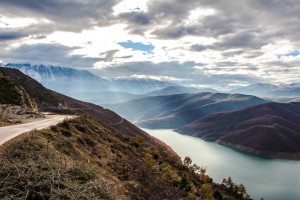
Scenic mountain landscape with river under cloudy sky.How much is water worth?

The question in itself is a huge discussionamong corporate leaders and governmental agencies throughoutthe world. With increased demands of growing populations,droughts which plague many regions globally, and the lack of conservation, many are asking “how do we protect a common resource throughout the world,while providing a necessity of life for all of its inhabitants?” According to the UN’s Intergovernmental Panel on Climate Change “We have a genuine, burgeoning, boundary – crossing crisis over water.” PepsiCo. CEO Indra Nooyi says “The world water crisis is one of the most pressing challenges of our age.”

Companies are concerned as farmland suffers and the demand for water mounts.What is the solution? According to Fortune Magazine, “Some say: make people pay more for the most precious commodity on earth. “When water has no value, even low cost technology will never get implemented on a large scale.” Furthermore, the article deems that water is so inexpensive that there is no incentive for conservation. Water needed for drinking, cooking, farming and basic life supporting necessities needs to be available to all, while there should be limits on non-essential use of water with cost increases to offset conservation practices and technologies.

The city of San Diego, which has experienced a drought not seen before in our lifetime,is investing money inlarge scale desalinization systems, paid for, in part, by a tiered water pricing system. While many think this to be controversial, the need is there, without some sort of rethinking how we manage our water supplies, there will be little water to manage.

While rainwater collection is not going to be the final answer to water conservation, it certainly is a simple step that can be adopted relatively inexpensively, and with positive results on a small scale. Think about the moneythat can be saved by our municipal water districts which can then be redirected to other methods of supplying water. If the city of San Diego, as well as other cities, would realize the value of water and encourage rainwater collection on a larger scale, we could conserve over half the amount of water being wasted for non-essential use.

Rainwater Collection Helps Mitigate Urban Storm Water Runoff


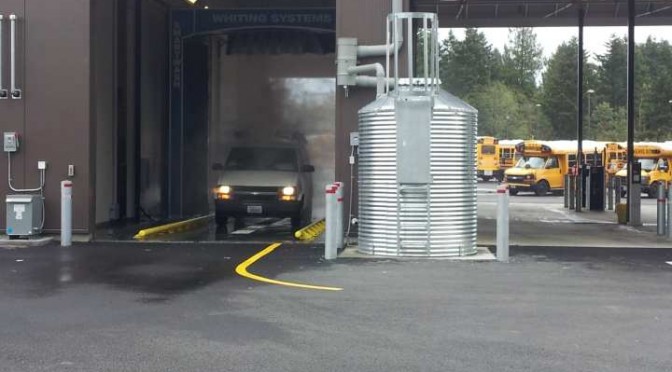
A vehicle emits thick white smoke while entering a building.With lessvegetation, more square footage of impervious surfaces, and more population density, cities contribute to the bulk of storm water runoff. Rethinking how we control storm water in our urban environments isessential to the health of our bodies of water. During large rainevents, a sewer system can be overwhelmed with runoff, causing intentional releases, withpollutants entering our rivers, lakes, bays, and estuaries.

The use of on site infiltration is mandatory for new construction, along with other practices such as swales along our roads rather than raised medians. Green roofs, green areas within our cities and the use of rainwater collection all have a positive impact on storm water runoff. Common sense approaches tostorm water within our cities is crucial to the health of our environment.

Rainwater collection for commercial construction and residential not only helps mitigate storm water run off, but also helps protect our water supplies by using rain water for irrigation, toilet facility, and other uses. The city of Federal Way in Washington state implemented rainwater collection for its new school maintenance facility by using rainwater for school bus wash down during the school year, and during the summer uses the collected water for irrigation.