
 According to the American Water Works Association, leaks cause 14% of household water budget.
Whether you are on city water, well, or rainwater catchment, leaks cause not only money, but possible damage to crawl spaces, insulation, sheet rock, and flooring. Leaks can be a cause of black mold, which can turn into a health concern in your own home. If you are on a rainwater collection system, 14% of your water use is a considerable loss. Nationwide, water leaks affect our aquifers, reservoirs, and municipal water supplies on a large scale. The cost of water is so inexpensive, many shrug off a small leak as a nuisance, rather than take a proactive response to correct the problem.
Occasional inspections of your water system and plumbing can save thousands of dollars in repairs if caught early – before damage is done.It can be as simple as checking under sinks, looking in the basement at plumbing connections, even turning off all use in the house and monitor the meter for a short period to see if it records any use.
If you’re on a rainwater collection system, gutters and downspouts can be a source of leaks you might not have thought of. The next time it rains, go out and look at your gutters and downspouts. Leaks usually will be from clogged down spouts,resulting in gutters overflowing. Take a look at the seams of downspouts, particularly any horizontal runs. If you find any leaks, repair with a marine adhesive or replace with solid PVC 3″ or 4″ pipe with glued connections. Look at the connections of your pump and filtration to be sure they show no signs of leaking. A toilet running can use a significant amount of water. If you find your toilet is running continually, check your flush valve and flapper. This is a simple and inexpensive repair that homeowners can conduct themselves.
With simple diligence, leaks can be avoided or fixed, which saves money, time, and water. Be water wise.
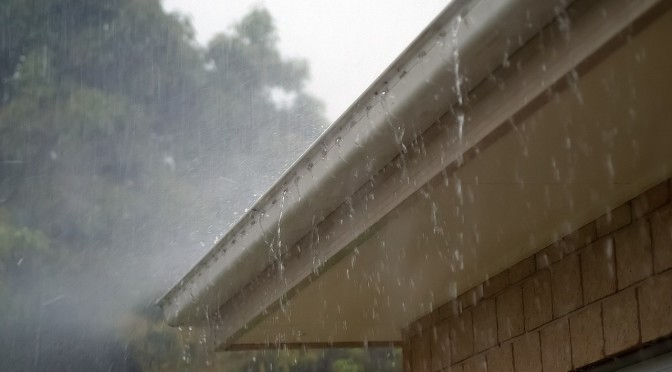
 Stormwater is rainwater that has not been collected and stored for future use, infiltrated or managed at the source. Rainwater, when not stored for future use or infiltrated on site, will flow into storm drains picking up toxins on the way and eventually will end up in our waterways.
 Here is an interesting video I’ve watched that easily explains how trees are a major part of our water system and why planting more trees and, specifically the soil in which they exist, offer a sustainable and an affordable solution to our water quality and scarcity problems – like the drought that is affecting California.