
 Do you think contaminated water only existsin developing countries?
The other day, there was a Boil Your Water Advisory in Washington State. According to KIRO News,”About800 residents in Wauna on the Key Peninsulawere affected when E. coli was detected in their water supply.” The water system in Wauna is a community well system.The contamination was found during a routine monthly test, but the source of the contamination has yet to be determined.
E. coli has been recently detected in the Mount Baker area. The water system serves about 220 homes. One child died and 2 others got sick in Lincoln County, Oregon last week. In addition, Mercer Island City water systemhad a suspected outbreak as well. Local restaurants were affected and lost profits due to the scare. Earlier this year dead birds were found in a Portland city reservoir.
There have been 26 contaminations this year – and 25 last year as well.These boil alerts are becoming increasingly more common throughout our country.
Why is this happening? Aging infrastructure can partly beattributed to the cause. With increased population density and larger demands on our centralized water and sewer districts, rainwater collection and decentralized water systems may be the better answer for Seattle. A small urban rainwater collection system for residential use is easy to maintain and has less potential of contamination if installed and properly maintained.
 Throughout the world, more than 780 million people have no access to clean drinking water.
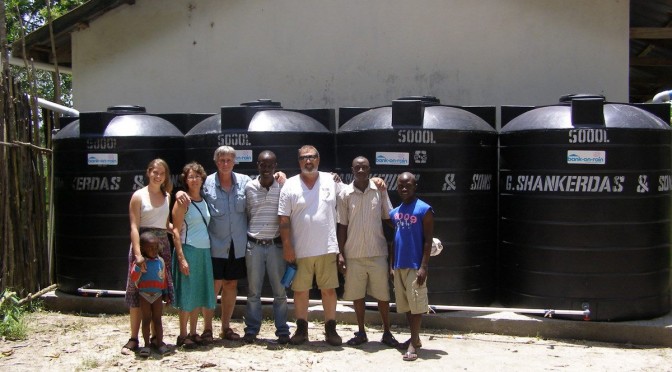
 Simple techniques of rainwater collection and natural solar water disinfection can saves lives in developing countries. Rainwater collected from the roof and screened before storage comes in no contact with sewer materials or human feces, leaving only bacterial contaminants to be disinfected. This can be achieved as simplyas filling a 1litter, clear bottle with rainwaterand leaving it in direct sunlight for approximately 4 hours or 8 hours in overcast conditions.
 Supplementary whole-house use of rainwater in an urban environment is more complex than collecting for potable use in a rural environment. In a rural environment, there is typically more room for storage, allowing the homeowner to store more water than that inan urban setting.